

Viator vs Klook: Which Tour Booking Platform is Best in 2026?
Viator
Viator is the ideal choice for travelers seeking a vast, reliable inventory of classic tours, especially in Europe and North America. Its TripAdvisor integration and flexible booking options provide unparalleled peace of mind.
Overall Score
Top Picks
Viator
Viator wins on its unmatched inventory in Western markets and unparalleled planning flexibility with its 'Reserve Now, Pay Later' option. The deep integration with TripAdvisor reviews offers a layer of trust that is hard to beat.
Klook
Klook wins on superior pricing, a best-in-class mobile app experience, and a fantastic range of deals and essential travel services (like transport and connectivity) in Asia.
Comparison
Design
Performance
Value for Money
Ease of Use
Durability
Features
Choosing the right platform to book tours and activities can make or break your travel experience. In a crowded market, two giants stand out: Viator and Klook. Viator, a TripAdvisor company, is the established veteran with a massive global inventory. Klook is the dynamic, mobile-first challenger that has taken the travel world, especially Asia, by storm. But which one is truly better for you?
This comprehensive, data-driven comparison will dissect every aspect of Viator and Klook, from their user interface and pricing models to their customer support and unique features. We'll explore real-world scenarios to help you understand which platform excels for a family trip to Europe, a backpacking adventure in Southeast Asia, or a luxury getaway. By the end of this guide, you'll have a clear, confident answer.
| Feature | Viator | Klook |
|---|---|---|
| Overall Rating | 8.8/10 | 8.5/10 |
| Geographic Focus | Global, with strong presence in North America & Europe | Global, with dominant presence in Asia-Pacific |
| Inventory Size | 300,000+ activities | 490,000+ activities |
| Best For | First-time travelers, classic tours, Western destinations | Budget travelers, tech-savvy users, Asian destinations |
| Pricing Model | Standard pricing, occasional deals | Often discounted, dynamic pricing, bundles |
| User Experience | Desktop-friendly, traditional, reliable | Mobile-first, modern, app-focused |
| Cancellation Policy | Generally flexible (often 24-hour free cancellation) | Varies by activity, can be less flexible |
| Loyalty Program | TripAdvisor-integrated rewards | Klook Rewards (credits on bookings) |
| Pros |
|
|
| Cons |
|
|
| Call to Action | Explore Tours on Viator | Find Deals on Klook |
Quick Verdict: Which Platform Should You Choose?
Here's the bottom line: Viator is the better choice for travelers seeking a vast, reliable inventory of classic tours, especially in Europe and North America. Its integration with TripAdvisor provides a safety net of extensive reviews, and its 'Reserve Now, Pay Later' feature offers unparalleled flexibility for planning. It's the go-to platform for families, first-time international travelers, and anyone who prioritizes comprehensive options and peace of mind over getting the absolute lowest price.
On the other hand, Klook is the superior option for tech-savvy, budget-conscious travelers, particularly those exploring Asia. Its mobile-first approach, often lower prices, and unique offerings like transportation passes, SIM cards, and food vouchers make it an indispensable tool for independent travelers. If you live in the app ecosystem and are hunting for the best deal on everything from a theme park ticket in Japan to a train pass in Taiwan, Klook is almost always the winner.
Ultimately, the decision isn't about which platform is universally 'better,' but which is better for your specific trip. For a guided tour of the Vatican, start with Viator. For a multi-activity trip to Seoul, open the Klook app first.
Viator Rating
- Overall: 8.8/10
- User Experience: 9.0/10
- Activity Variety: 9.5/10
- Value for Money: 8.0/10
- Customer Support: 9.0/10
- App Functionality: 8.5/10
- Where Viator Wins: Unmatched inventory in Western markets and unparalleled planning flexibility with its 'Reserve Now, Pay Later' option. The deep integration with TripAdvisor reviews offers a layer of trust that is hard to beat.
Klook Rating
- Overall: 8.5/10
- User Experience: 9.5/10
- Activity Variety: 8.5/10
- Value for Money: 9.0/10
- Customer Support: 7.5/10
- App Functionality: 9.5/10
- Where Klook Wins: Superior pricing, a best-in-class mobile app experience, and a fantastic range of deals and essential travel services (like transport and connectivity) in Asia.
Which is Better: Viator or Klook?
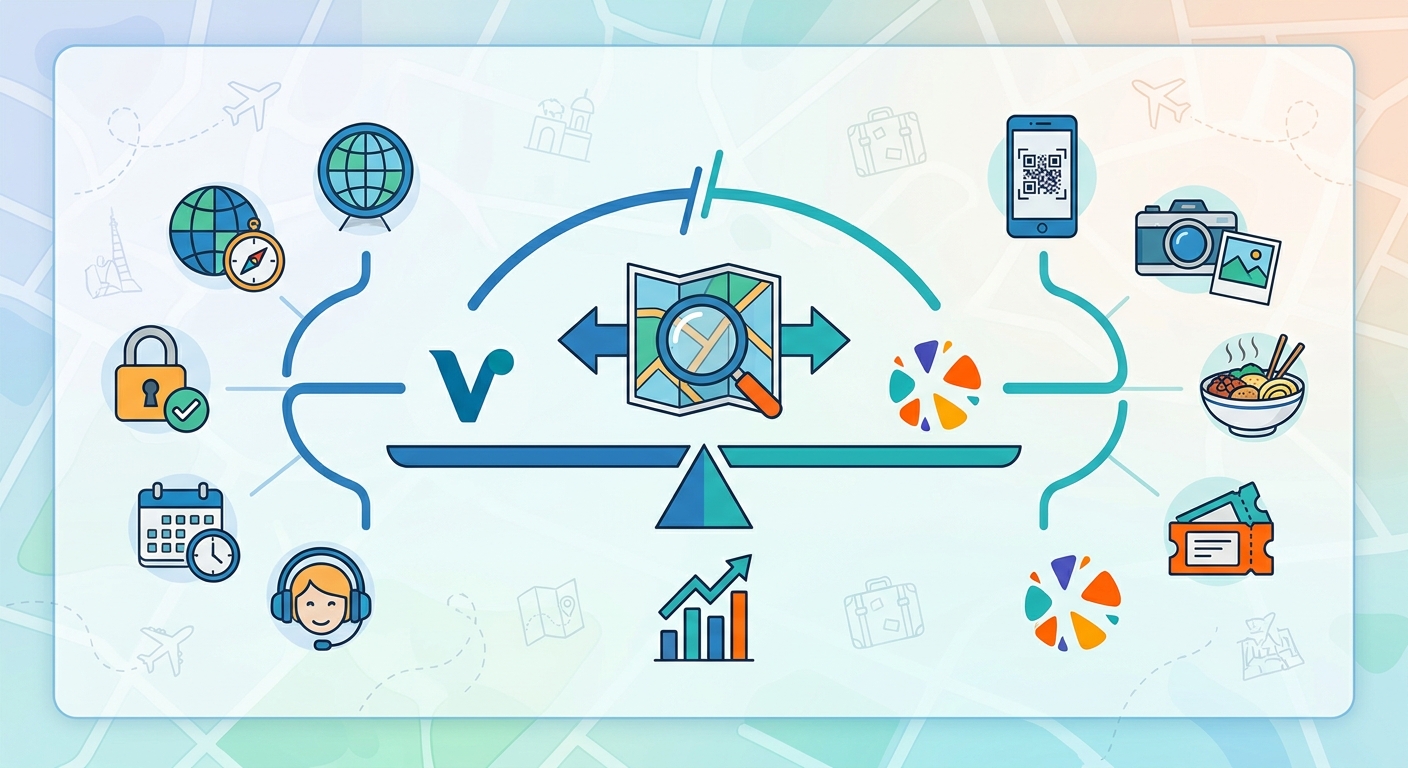
The definitive answer is: Viator is better for comprehensive, traditional tour booking in Western countries, while Klook is better for deals and mobile-first booking, especially in Asia. Neither platform is universally superior; their strengths are tailored to different types of travelers and destinations. Choosing the right one depends entirely on your travel style, budget, and where you're going.
Viator, backed by the powerhouse of TripAdvisor, functions like a massive, reliable supermarket for travel experiences. It has an aisle for everything, from skip-the-line tickets to the Eiffel Tower to multi-day excursions in the American Southwest. Its key advantage is depth and breadth. If an established tour exists in a popular destination, Viator almost certainly lists it. This makes it an incredibly safe and dependable choice for travelers who are planning well in advance and want to secure spots for major attractions. The integration of millions of TripAdvisor reviews directly on the booking page provides a powerful layer of social proof that gives users confidence in their purchase.
Klook, in contrast, operates like a trendy, high-tech marketplace focused on delivering the best value and a seamless mobile experience. Its roots and strength lie in the Asia-Pacific region. While Viator might list the main tour for the Grand Palace in Bangkok, Klook will not only list that tour (often at a lower price) but also offer a combo deal with a river cruise, a discounted SIM card to use upon arrival, and a voucher for a famous mango sticky rice stall nearby. This holistic approach to the travel experience, combined with a slick app and features like instant confirmation and mobile e-tickets, makes it a favorite among younger, more independent travelers.
Consider this real-world scenario: A family of four is planning a trip to London. Their priorities are securing tickets for the Tower of London and a Harry Potter studio tour. For them, Viator is the ideal choice. They can read thousands of reviews, book months in advance using 'Reserve Now, Pay Later' to manage their budget, and receive clear instructions and reliable tickets. Conversely, a solo backpacker landing in Taipei needs a train pass from the airport, a local SIM card, and a ticket to the Taipei 101 observatory. Klook's app allows them to book all three items in minutes, often with instant confirmation, and store all the QR-code tickets directly on their phone. This convenience and value proposition is where Klook truly shines.
What Are the Key Differences Between Viator and Klook?
The primary differences between Viator and Klook lie in their geographic focus, pricing strategy, and user experience philosophy. Viator is a global platform with a Western-centric inventory and a traditional, desktop-friendly interface, whereas Klook is an Asia-centric, mobile-first platform built around providing discounts and a seamless app experience.
Let's break down these core distinctions. First, geographic specialization is the most significant differentiator. Viator boasts over 300,000 bookable experiences globally, with exceptional coverage in Europe, North America, and Australia. If you're looking for a wine tour in Tuscany or a helicopter ride over the Grand Canyon, Viator's selection is encyclopedic. Klook, while also global, has its center of gravity firmly in Asia. It lists over 490,000 activities, but a substantial portion is concentrated in destinations like Japan, South Korea, Thailand, and Singapore. Klook's deep network in these regions allows it to offer not just tours but also essential travel services like rail passes, private car hires, and attraction passes that are often hard to find on other platforms.
Second, their pricing and value propositions are fundamentally different. Viator operates on a more standard retail model. Prices are competitive but rarely the absolute cheapest. Its value comes from reliability, selection, and features like flexible cancellation and 'Reserve Now, Pay Later'. Klook, on the other hand, is built for deal-hunters. It frequently offers lower prices than competitors, runs flash sales, and provides booking bundles that combine popular activities for a reduced cost. For example, when booking tickets for Hong Kong Disneyland, Klook often has exclusive meal voucher add-ons or transportation packages that provide tangible savings over booking each component separately. Their Klook Rewards program, which gives you credits for future bookings, is also more immediately gratifying than many other loyalty schemes.
Finally, their approach to user experience reflects their target demographics. Viator's website is comprehensive and easy to navigate on a desktop, catering to planners who research and book trips from home. Its app is functional but serves more as a mobile version of the website. Klook is the opposite. It was designed from the ground up as a mobile-first platform. Its app is incredibly intuitive, fast, and feature-rich, encouraging spontaneous, on-the-go bookings. Features like instant confirmation and QR-code tickets are central to the Klook experience, appealing to a younger generation of travelers who manage their entire trip from their smartphone. This distinction is crucial: Viator is for planning your trip, while Klook is for both planning and living your trip in real-time.

Design & User Experience Comparison
When comparing design and user experience, Klook offers a more modern, intuitive, and mobile-centric experience, while Viator provides a more traditional, data-rich, and desktop-focused interface. Klook's app is a clear winner for in-destination use, whereas Viator's website excels during the detailed planning phase of a trip.
Klook's entire platform is built around a slick, minimalist, and visually appealing design. The user journey is smooth and frictionless, particularly on the mobile app. The search function is fast, and results are displayed in a clean, card-based layout with vibrant imagery. Klook understands its audience wants speed and convenience. The booking process is often just a few taps, with clear calls-to-action and minimal clutter. A standout feature is the integration of QR codes and e-vouchers directly within the app's booking section. This eliminates the need to print tickets or search through emails, a huge advantage when you're standing at the entrance of an attraction. For instance, booking a ticket for the Singapore Cable Car on Klook means you can buy it while in the taxi on the way there, get an instant confirmation, and simply scan the QR code on your phone at the gate. This seamlessness is the hallmark of Klook's UX.
Viator, conversely, presents a more classic and information-dense design. Its website feels like an extension of TripAdvisor, which is both a strength and a weakness. The strength lies in the sheer amount of information available. Each listing is packed with details, multiple photos, and, most importantly, a direct feed of countless user reviews and ratings. This allows planners to do deep research and weigh their options carefully. However, this can also lead to a sense of information overload. The user interface, while functional, can feel slightly dated compared to Klook's. The booking process is straightforward but involves more steps and feels more formal. While its app is perfectly usable for accessing tickets and managing bookings, it lacks the fluidity and all-in-one utility of Klook's, feeling more like a companion to the website than a standalone tool.
Let's imagine a user booking a day trip from Florence to Cinque Terre. On Viator, they would be greeted with dozens of options, each with hundreds or thousands of reviews. They might spend an hour reading through detailed itineraries, comparing tour operators, and analyzing traveler photos before making a decision. On Klook, the same search might yield fewer, more curated options, presented with a focus on the best price or a unique feature like an included lunch. The decision-making process is faster, driven by clear value propositions rather than exhaustive research. Neither approach is inherently wrong, but they cater to different user mentalities. Klook is for the decisive deal-seeker; Viator is for the meticulous planner.
Performance & Reliability Comparison
In terms of performance and reliability, Viator holds the edge for overall dependability and customer support, while Klook excels in app performance and instant confirmation speed. Viator's long-standing reputation and TripAdvisor backing provide a strong sense of security, but Klook's modern tech stack offers a faster, more responsive user experience.
Viator's reliability is its cornerstone. As a TripAdvisor company, it is held to a high standard and has a well-established infrastructure for handling bookings, payments, and customer issues. The tour operators listed on Viator are generally well-vetted, and the platform's 'Things to Do' integration across TripAdvisor means it's backed by a massive ecosystem. Where this reliability truly shines is when things go wrong. If a tour is canceled by the operator, or if there's a dispute, Viator's customer support is typically more accessible and empowered to provide resolutions, including refunds. Their 24/7 support and clear policies, like the standard 24-hour free cancellation on most bookings, create a safety net that many travelers are willing to pay a premium for. You can book a crucial 'skip-the-line' Colosseum tour months in advance, confident that the booking is secure and that you have recourse if issues arise.
Klook's performance, on the other hand, is defined by its technological prowess. The app is exceptionally fast, searches are instantaneous, and the booking process is seamless. Klook's focus on direct partnerships with merchants, especially in Asia, enables its 'instant confirmation' feature on a vast number of products. This is a game-changer for spontaneous travelers. You can be walking through Shibuya in Tokyo, decide you want to go up the Shibuya Sky observatory in an hour, and book a ticket on Klook with immediate confirmation. However, this speed can sometimes come at the cost of support consistency. While Klook's support has improved, it can be more challenging to reach a human agent, and resolutions can sometimes be slower compared to Viator. The reliability is more focused on the technology working flawlessly, which it usually does, rather than on a robust human support network for edge cases.
Consider the scenario of a canceled activity. A traveler books a hot air balloon ride in Cappadocia. If the ride is canceled due to weather (a common occurrence), a Viator customer will likely receive a proactive email and find it relatively easy to contact support to rebook or get a full refund. A Klook customer will also be notified, but navigating the refund or rebooking process might rely more on in-app chat functions or email exchanges, which can feel less personal and occasionally be slower. This isn't to say Klook is unreliable - far from it. But its support infrastructure is still maturing compared to the well-oiled machine of Viator/TripAdvisor. The trade-off is clear: Viator offers institutional reliability, while Klook offers technological agility.
Features Comparison (In-Depth)
While both platforms book tours, their feature sets reveal their different priorities. Viator's standout features are 'Reserve Now, Pay Later' and deep TripAdvisor review integration, catering to planners. Klook's key features are its all-in-one app with transport/SIM card integration and its robust rewards program, catering to mobile-native value seekers.
Viator's most compelling feature is undoubtedly 'Reserve Now, Pay Later'. This allows users to lock in their spot on popular, often sold-out tours, without paying anything upfront. Payment is typically due just a few days before the activity. For travelers planning complex, multi-city trips on a budget, this is a massive advantage. You can secure your entire itinerary - from a Vatican tour in Rome to a food tour in Paris - months in advance, ensuring you don't miss out, all while managing your cash flow. This feature demonstrates Viator's understanding of the long-term planner. The second pillar of its feature set is the seamless integration of TripAdvisor reviews. Every listing shows not just a star rating but the full text and photos from millions of TripAdvisor users. This provides an unparalleled level of authentic, user-generated feedback, building immense trust and helping customers make informed decisions.
Klook, conversely, focuses its features on creating a comprehensive in-destination tool. Its app is more than just a tour booker; it's a travel utility. You can book Japan Rail Passes, Swiss Travel Passes, airport transfers, and local SIM cards or pocket Wi-Fi devices. This transforms the app from something you use before your trip to something you use constantly during your trip. Imagine landing at Kansai Airport in Osaka. You can use the Klook app to activate your pre-booked train ticket to Kyoto, look up a discounted dinner voucher for a restaurant near your hotel, and book a last-minute tea ceremony for the next day. This ecosystem approach is Klook's killer feature. Furthermore, its Klook Rewards program is simple and effective. You earn credits on every booking, which can be directly applied to future purchases. This creates a powerful incentive loop that encourages loyalty, especially for frequent travelers in Asia.
Let's create a table to break this down:
Feature Breakdown: Viator vs. Klook
| Feature | Viator | Klook | Winner & Explanation |
|---|---|---|---|
| Flexible Booking | Excellent ('Reserve Now, Pay Later') | Good (Varies by activity) | Viator. 'Reserve Now, Pay Later' is a game-changing feature for financial planning and securing spots early. |
| User Reviews | Excellent (Deep TripAdvisor integration) | Good (Internal review system) | Viator. Access to millions of detailed TripAdvisor reviews provides more depth and trust than Klook's solid but smaller internal system. |
| Mobile App Experience | Good (Functional and stable) | Excellent (Fast, intuitive, all-in-one) | Klook. The app is a core part of its product, not just a website companion. It's faster, slicker, and more feature-rich. |
| Travel Essentials | Limited (Mainly airport transfers) | Excellent (Trains, SIMs, Wi-Fi, passes) | Klook. Its integration of transport, connectivity, and passes makes it an indispensable tool, especially in Asia. |
| Loyalty Program | Fair (Ties into TripAdvisor) | Excellent (Simple, credit-based Klook Rewards) | Klook. The rewards are more transparent, easier to earn, and simpler to apply, creating a stronger loyalty incentive. |
| Instant Confirmation | Common | Very Common (Core feature) | Klook. Klook has built its reputation on instant bookings, making it superior for spontaneous, last-minute plans. |
Pricing & Value for Money
In the crucial category of pricing and value, Klook generally offers lower prices and better overall value for money, while Viator's value lies in its flexibility, reliability, and vast selection. If your primary goal is to find the lowest price for a specific activity, Klook is almost always the better place to start.
Klook's business model is built on securing exclusive deals and offering competitive pricing. They often work directly with merchants to create bundles or offer discounts that aren't available elsewhere. This is most evident with major theme park tickets, museum passes, and transportation. For example, a search for tickets to Universal Studios Japan will likely show a lower base price on Klook compared to Viator. More importantly, Klook might also offer a package that includes an Express Pass or a meal voucher for a small additional cost, significantly increasing the overall value. Their frequent use of promo codes, flash sales, and the Klook Rewards system further solidifies their position as the budget-friendly choice. A traveler can save a tangible amount - potentially 10-20% over the course of a multi-activity trip - by booking through Klook.
Viator, while not typically the cheapest, provides value in other ways. Its prices are generally aligned with the official direct price or other major online travel agencies. The premium you might pay on Viator is for peace of mind and flexibility. The 24-hour free cancellation policy on most of its 300,000+ listings is incredibly valuable. It allows travelers to make tentative plans and adapt if the weather turns or their itinerary changes, without financial penalty. The 'Reserve Now, Pay Later' feature, as mentioned, is another form of value, allowing for better financial planning. Essentially, with Viator, you are paying for risk reduction and convenience. For a once-in-a-lifetime, expensive activity like a private gondola ride in Venice, paying a slight premium on Viator for the assurance of a vetted operator and a flexible cancellation policy can be well worth it.
Let's use a real-world cost analysis. Imagine a family of four planning a trip to Singapore. Their to-do list includes: Gardens by the Bay, the Singapore Zoo, and Universal Studios Singapore. On Klook, they would likely find a combo pass for all three attractions, apply a new user discount code, and pay a total of, for example, $750. On Viator, they would book each ticket separately, likely for a total closer to $820. However, the Viator bookings might all come with a 'cancel up to 24 hours before' policy, whereas the Klook combo pass might be non-refundable. The $70 difference becomes a choice: is the guaranteed saving worth the reduced flexibility? For a budget-conscious family with a fixed itinerary, Klook is the clear winner. For a family that wants to keep its options open, the higher price on Viator might be a justifiable insurance policy.
Pros and Cons (Detailed Breakdown)
Every platform has its strengths and weaknesses. Here is a detailed, balanced breakdown of the pros and cons for both Viator and Klook to help you make a nuanced decision based on what matters most to you.
Viator: The Reliable Global Megastore
Pros:
- Unmatched Global Inventory: With over 300,000 listings, particularly in Europe and the Americas, if a mainstream tour exists, Viator has it. This comprehensive selection is ideal for one-stop planning.
- TripAdvisor Review Integration: The ability to access millions of trusted TripAdvisor reviews directly on the booking page provides an unparalleled layer of confidence and social proof. You're not just relying on the platform's curated feedback.
- Exceptional Booking Flexibility: The 'Reserve Now, Pay Later' feature is a standout, allowing users to secure popular activities far in advance without immediate payment. This is a huge benefit for budget management and long-term planning.
- Standardized Free Cancellation: A majority of Viator's listings offer free cancellation up to 24 hours in advance, providing a consistent and traveler-friendly policy that reduces booking anxiety.
- Established Reliability and Support: As a TripAdvisor company, Viator has a robust customer support infrastructure. When issues arise, there are clear channels for resolution, offering peace of mind.
Cons:
- Higher Price Point: Viator is often not the cheapest option. The price for reliability and flexibility can mean you'll pay a premium compared to platforms like Klook.
- Fewer Unique or Local Deals: The inventory tends to focus on established, popular tours. It can be harder to find the quirky, off-the-beaten-path experiences or the integrated local deals (like food vouchers) that Klook excels at.
- Dated User Interface: While functional, the website and app can feel less modern and more cluttered than Klook's slick, mobile-first design. It can lead to information overload for some users.
Klook: The Modern, Mobile-First Deal Hunter
Pros:
- Highly Competitive Pricing: Klook's core value proposition is offering great deals. It frequently has the lowest prices, especially for attractions and activities in Asia, often supplemented by promo codes and flash sales.
- Superb Mobile App Experience: The app is best-in-class. It's fast, intuitive, and serves as an all-in-one travel tool, consolidating tickets, vouchers, and confirmations in one easily accessible place.
- Excellent for Asian Travel: Klook's dominance in Asia is its key strength. The platform offers deep inventory and integrated travel essentials like Japan Rail Passes, pocket Wi-Fi, and SIM cards that are crucial for travel in the region.
- Instant Confirmation and E-Tickets: A huge number of activities offer instant confirmation, making Klook perfect for spontaneous, on-the-go planning. The seamless QR code system is incredibly convenient.
- Effective Rewards Program: The Klook Rewards program is straightforward and provides tangible value, allowing users to easily earn and apply credits to future bookings.
Cons:
- Inconsistent Customer Support: While improving, customer support can be harder to reach and less consistent than Viator's. Resolutions may rely more on chat bots and email, which can be frustrating.
- Variable Cancellation Policies: Unlike Viator's standard 24-hour policy, Klook's cancellation rules vary significantly by product. Some of the best deals are often non-refundable, which reduces flexibility.
- Weaker Presence in Western Markets: While Klook is expanding globally, its inventory in more remote parts of Europe and North America can be less comprehensive than Viator's.
Which is Best for Beginners?
For beginners or first-time international travelers, Viator is the better and safer choice. Its platform is built on principles that directly address the key anxieties of new travelers: fear of missing out, uncertainty about quality, and the need for flexibility.
A first-time traveler planning a trip to a major city like Rome or Paris is often overwhelmed by choices. Viator's greatest asset for this user is its connection to TripAdvisor. Seeing thousands of recent, detailed reviews for a 'Skip-the-Line Vatican Tour' provides immediate confidence. The platform's structure guides the user through the process, offering clear descriptions, meeting points, and what's included. This hand-holding is invaluable. The sheer volume of options, while potentially overwhelming, also ensures that every major landmark and activity is covered, so a beginner doesn't have to worry that they are missing a crucial experience. They can essentially plan their entire sightseeing itinerary from one trusted website.
Furthermore, the 'Reserve Now, Pay Later' and standard 24-hour free cancellation policies are perfectly suited for beginners. New travelers often finalize their plans late or need to make changes. Viator's flexibility allows them to book tentative schedules without financial risk. For instance, they can book a walking tour for Tuesday but easily cancel and rebook for Wednesday if they are feeling jet-lagged. This removes a significant layer of stress from the planning process. The reliability of Viator's customer service also acts as a crucial safety net. If a beginner gets lost trying to find a meeting point, knowing there's a 24/7 support line to call is incredibly reassuring.
While Klook is an excellent platform, its strengths appeal more to a traveler who is already confident and independent. Its mobile-first nature, focus on deals, and sometimes complex combo packages assume a certain level of travel savvy. A beginner might not need a combo deal that includes a SIM card and a public transport pass; they need the most straightforward, most highly-rated tour of the Louvre. Klook's variable cancellation policies can also be a pitfall for a new traveler who isn't accustomed to reading the fine print on every booking. Viator's standardized, user-friendly policies make it the clear winner for anyone taking their first steps into international travel.

Use-Case Segmentation: Who Should Choose Viator vs. Klook?
The best way to decide between Viator and Klook is to match their strengths to your specific travel profile. Below is a breakdown of which platform is better for different types of travelers and trips.
Winner for Families: Viator
Families often travel with complex schedules and need reliability above all else. Viator's extensive selection of family-friendly tours, clear reviews from other families, and flexible cancellation policies make it the top choice. Being able to reserve spots for five people at a popular attraction months in advance with 'Reserve Now, Pay Later' is a huge logistical advantage. The peace of mind that comes with a well-vetted tour operator and strong customer support is paramount when traveling with children.
Winner for Backpackers & Budget Travelers: Klook
For those stretching every dollar, Klook is the undisputed champion. Its competitive pricing, frequent discounts, and valuable combo deals can lead to significant savings. Backpackers in Southeast Asia, for example, will find Klook indispensable for booking cheap bus tickets, hostel-friendly tours, and essential services like SIM cards. The excellent mobile app and instant e-tickets are perfect for the spontaneous and flexible nature of budget travel.
Winner for Planners & Researchers: Viator
If you're the type of traveler who creates detailed spreadsheets and reads dozens of reviews before making a decision, Viator is built for you. The deep integration with TripAdvisor provides a massive repository of data to help you choose the perfect tour. The desktop-friendly interface is conducive to in-depth research sessions, comparing itineraries, and vetting tour operators based on thousands of data points.
Winner for Tech-Savvy & Spontaneous Travelers: Klook
For travelers who live on their smartphones, Klook offers a superior experience. Its fast, intuitive app makes booking activities on the fly a breeze. If you arrive in a city with no plans, you can pull out your phone, see what's popular nearby, find a deal, book it with instant confirmation, and be on your way in minutes. This agility is something Viator's more traditional platform cannot match.
Use-Case Comparison Table
| Traveler Type / Trip Style | Recommended Platform | Reasoning |
|---|---|---|
| Family Vacation in Europe | Viator | Reliability, flexible cancellations, and extensive reviews are key for family travel. |
| Backpacking in Southeast Asia | Klook | Unbeatable prices, mobile convenience, and essential travel services (transport, SIMs). |
| Honeymoon or Luxury Trip | Viator | Better selection of private and luxury tours, with the reliability you want for a special occasion. |
| Last-Minute Weekend Getaway | Klook | Superior for spontaneous bookings due to its mobile app and instant confirmation features. |
| Complex, Multi-City Itinerary Planner | Viator | 'Reserve Now, Pay Later' allows for securing an entire itinerary without upfront costs. |
| Deal-Oriented Traveler | Klook | Consistently lower prices, promo codes, and a rewarding loyalty program. |
Alternatives to Viator and Klook
While Viator and Klook are market leaders, they aren't the only options. Depending on your needs, a few other platforms might be a better fit, especially for specific niches. Two of the strongest alternatives are GetYourGuide and Tiqets.
GetYourGuide: The Best of Both Worlds
GetYourGuide is perhaps the most direct competitor to both Viator and Klook and strikes an excellent balance between their respective strengths. It has a large global inventory, similar in scope to Viator, but with a more modern, user-friendly interface that feels closer to Klook. GetYourGuide is particularly strong in Europe, often featuring unique 'Originals' tours that are exclusive to its platform. These curated experiences can be a major draw. Their platform has a strong focus on high-quality listings and clear, upfront information. For many travelers, GetYourGuide hits the sweet spot, offering a great selection and a modern booking experience without specializing as heavily as Viator (Western classics) or Klook (Asian deals).
Tiqets: The Specialist for Museums & Attractions
Tiqets focuses on one thing and does it exceptionally well: providing instant, mobile-friendly tickets to museums, attractions, and cultural venues. Their entire platform is designed for speed and convenience. The core proposition is helping travelers skip the long ticket lines. If your primary goal is to get tickets for the Rijksmuseum in Amsterdam, the Sagrada Familia in Barcelona, or MoMA in New York, Tiqets is often the fastest and most straightforward way to do it. They partner directly with venues to offer authorized e-tickets. While they don't offer the broad range of guided tours or multi-day excursions you'd find on Viator or Klook, they are a superb, specialized tool for attraction ticketing.
Direct Booking with Tour Operators
For those willing to do extra research, booking directly with the local tour operator can sometimes be beneficial. It can occasionally be cheaper, as it cuts out the middleman's commission. More importantly, it can provide a more direct line of communication with the provider for custom requests or specific questions. However, this approach comes with downsides. You lose the centralized booking management, the safety net of a large platform's customer service, and the ability to easily compare options and read aggregated reviews. For most travelers, the convenience and security of using a platform like Viator, Klook, or GetYourGuide outweigh the potential small benefits of booking direct.
Final Verdict
After an exhaustive comparison, the choice between Viator and Klook is not about a definitive winner, but about a strategic decision based on your personal travel needs. Both are excellent platforms that have revolutionized how we book and experience travel activities, but they serve different masters.
You should choose Viator if you are a planner, a first-time traveler, or someone who prioritizes reliability, vast selection, and flexibility above all else. Its immense inventory, especially in North America and Europe, ensures you'll find every major tour available. The integration with millions of TripAdvisor reviews provides an unmatched level of trust and insight. Features like 'Reserve Now, Pay Later' and the widespread 24-hour free cancellation policy are powerful tools that reduce financial risk and planning stress. Viator is the safe, dependable, and comprehensive choice for building a well-researched and secure travel itinerary.
You should choose Klook if you are a budget-conscious, tech-savvy, and independent traveler, especially if your journey takes you through Asia. Klook's mobile-first platform offers a fast, seamless, and often cheaper way to book not just tours, but an entire ecosystem of travel essentials. Its focus on deals, bundles, and an effective rewards program provides tangible value. For the spontaneous traveler who thrives on managing their trip from their smartphone, Klook's instant confirmations and convenient e-tickets make it the undisputed modern champion.
To put it simply:
Planning a family trip to Italy? Use Viator to reserve your Colosseum and Vatican tours months in advance with no upfront cost.
Backpacking through Vietnam and Thailand? Use the Klook app to book overnight buses, cooking classes, and island-hopping tours on the go, all while saving money.
The smartest strategy for a global traveler is to use both. Before your next trip, check both platforms for the activities on your list. Compare their prices, cancellation policies, and reviews. Use Viator for that crucial, must-do tour that sells out weeks in advance. Use Klook for that last-minute deal on an attraction ticket. By leveraging the unique strengths of each, you can craft the perfect, most efficient, and most enjoyable travel experience.
Find Your Next Adventure on Viator
Discover Amazing Deals on Klook
Frequently Asked Questions
Yes, Klook is generally cheaper than Viator, especially for activities and attractions in Asia. Klook's business model is focused on securing exclusive deals and offering competitive prices, often supplemented by promo codes and bundles. While Viator's prices are fair, they often prioritize flexibility and reliability, which can result in a slightly higher price point. For budget-conscious travelers, it is always recommended to compare prices on both platforms for your specific desired activity, but Klook is more likely to have the lower price.
Yes, Viator is a TripAdvisor company. It was acquired by TripAdvisor in 2014. This relationship is a significant advantage for Viator, as it allows for the deep integration of millions of TripAdvisor user reviews and photos directly into Viator's tour listings. This provides a huge amount of social proof and helps travelers make more informed decisions. It also means Viator is backed by the resources and reputation of one of the world's largest travel companies, enhancing its reliability and customer support infrastructure.
For booking tours in Europe, Viator is generally the better choice. It has a more extensive and mature inventory of classic tours, skip-the-line tickets, and day trips across European destinations. Its 'Reserve Now, Pay Later' and flexible 24-hour cancellation policies are also perfectly suited for planning a complex European itinerary. While Klook is expanding its European offerings and can sometimes have good deals on major attractions, Viator's depth of selection and established relationships with local tour operators give it a distinct edge in this region.
Yes, Klook is a legitimate and trustworthy platform used by millions of travelers worldwide. It has official partnerships with thousands of attractions and tour operators globally. The platform is known for its secure payment processing and its convenient e-ticket system. While some users report inconsistencies with customer service compared to more established players, the vast majority of transactions on Klook are smooth and reliable. It is particularly reputable for bookings within Asia, where it is a dominant market leader. As with any platform, it's always wise to read recent reviews for the specific activity you are booking.
Viator's main advantage is the combination of its massive selection, booking flexibility, and the trust instilled by its TripAdvisor integration. The 'Reserve Now, Pay Later' feature is a game-changer for long-term planners, allowing them to secure spots on popular tours without immediate payment. Furthermore, the standard 24-hour free cancellation policy on most activities provides unparalleled peace of mind. This powerful trio of features makes Viator an incredibly safe and reliable choice, especially for first-time travelers or those planning trips to popular Western destinations.