

Kiwi.com App Review: Is It Worth Downloading for Cheap Flights in 2026?
Kiwi
In 2026, the Kiwi app is a powerful tool for a specific type of traveler: the flexible, budget-conscious individual or group willing to embrace unconventional routes for significant savings. Its strength lies in its unique 'virtual interlining' technology, which stitches together flights from otherwise unconnected airlines, often resulting in cheaper fares and more diverse itinerary options than traditional booking platforms. If you prioritize finding the absolute lowest price and are comfortable with the inherent complexities of self-transfer flights - including potential baggage rechecks, visa requirements for layovers, and managing connections independently - then the Kiwi app is absolutely worth downloading.
View DealOverall Score
Introduction: Navigating Travel Savings with the Kiwi App in 2026
In the dynamic landscape of 2026 travel, finding genuinely cheap flights and flexible itineraries often requires more than just a quick search on a single airline's website. This is where specialized booking platforms, like the Kiwi app, aim to carve out a niche. The Kiwi app promises to unlock unique routes and significant savings by piecing together flights from various airlines, including low-cost carriers, often in ways traditional booking engines don't. But with such innovation comes a need for careful evaluation: is the Kiwi app truly worth downloading for cheap flights in 2026, or do its innovative approaches introduce complexities that outweigh the potential savings? This comprehensive Kiwi.com app review will explore these questions in depth.
This comprehensive review is designed for budget-conscious travelers, digital nomads, and anyone looking to optimize their travel budget without compromising too much on convenience. We'll delve deep into the Kiwi app's core functionalities, its unique 'virtual interlining' technology, and how it performs in real-world scenarios in 2026. Our goal is to provide a data-driven, editorial-quality assessment, helping you make a confident buying decision about whether to integrate the Kiwi app into your travel planning arsenal. We'll examine its price competitiveness, booking experience, customer support, and, critically, the transparency around its unique self-transfer itineraries. By the end, you'll have a clear understanding of who benefits most from the Kiwi app and who might be better served by alternative booking methods.
Summary Table: Kiwi App at a Glance
| Feature | Kiwi App Details |
|---|---|
| Product Name | Kiwi |
| Best For | Flexible, budget-conscious travelers seeking complex, multi-carrier itineraries and unique routes. |
| Price Range | Varies significantly by route and flexibility; often competitive for self-transfer options. |
| Key Strength | Innovative virtual interlining for discovering unique, cheaper flight combinations. |
| Key Weakness | Potential for increased complexity and risk with self-transfer itineraries, especially for refunds/changes. |
| Price Competitiveness & Value | Often finds lowest prices, but value depends on understanding trade-offs. |
| Search & Booking Experience | Highly intuitive search, but checkout requires careful attention to details. |
| Flight Coverage & Route Availability | Extensive, combining major and low-cost carriers globally. |
| Flexibility & Change Options | Offers flexible tickets, but standard bookings can be restrictive. |
| Refunds & Disruption Handling | Kiwi.com Guarantee offers some protection, but the process can be complex. |
| App Experience & Customer Support | Strong app for itinerary management, but support response times can vary. |
| Overall Rating | 8.1/10 |
| Call to Action | Check Latest Flight Deals on Kiwi |
| Where to Buy | View Deal |
Quick Verdict: Kiwi App for Cheap Flights in 2026
In 2026, the Kiwi app is a powerful tool for a specific type of traveler: the flexible, budget-conscious individual or group willing to embrace unconventional routes for significant savings. Its strength lies in its unique 'virtual interlining' technology, which stitches together flights from otherwise unconnected airlines, often resulting in cheaper fares and more diverse itinerary options than traditional booking platforms. If you prioritize finding the absolute lowest price and are comfortable with the inherent complexities of self-transfer flights - including potential baggage rechecks, visa requirements for layovers, and managing connections independently - then the Kiwi app is absolutely worth downloading. It excels at discovering routes you wouldn't find elsewhere and provides robust search filters.
However, if your travel style demands maximum simplicity, direct airline communication, guaranteed seamless connections, or straightforward refund processes, you might find Kiwi's model less appealing. Travelers who are risk-averse, prefer full-service airline support, or are unfamiliar with the nuances of self-transfer connections might encounter frustration. For these users, booking directly with an airline or through a traditional full-service online travel agency might be a safer bet. For everyone else, the Kiwi app offers a compelling proposition for unlocking new travel possibilities and potentially significant cost reductions in 2026. Buy it if you're an experienced, flexible traveler. Skip it if you need simplicity and direct airline accountability. Try it for a low-stakes domestic trip first if you're curious but cautious.

Short Answer: Is the Kiwi App Worth It in 2026?
Yes, the Kiwi app is worth downloading in 2026 for travelers prioritizing extreme budget savings and unique, complex flight itineraries that combine multiple carriers. Its strongest reason to buy is its virtual interlining feature, which often uncovers significantly cheaper routes unavailable elsewhere. However, the strongest reason to skip the Kiwi app is the added complexity and potential risk associated with self-transfer bookings, which place more responsibility on the traveler for missed connections, baggage, and navigating potential disruptions. For simple, direct flights or travelers who prefer straightforward support, other options may be more suitable.
Rating Summary
| Dimension | Score | Notes |
|---|---|---|
| Price Competitiveness & Value | 8.8/10 | Often finds the absolute lowest prices, especially for complex routes, but true value depends on hidden costs and self-transfer risks. |
| Search & Booking Experience | 8.5/10 | Excellent search flexibility and discovery tools, though the booking flow for complex itineraries requires careful attention. |
| Flight Coverage & Route Availability | 9.0/10 | Unparalleled breadth, combining major airlines and low-cost carriers globally for unique combinations. |
| Flexibility & Change Options | 7.5/10 | Offers flexible ticket add-ons, but basic bookings are subject to restrictive third-party and airline policies. |
| Refunds & Disruption Handling | 7.0/10 | The Kiwi.com Guarantee provides some peace of mind, but actual refund and rebooking processes can be slower and more complex than direct airline contact. |
| App Experience & Customer Support | 8.2/10 | Intuitive app for searching and managing itineraries, but customer support can be a pain point for urgent issues. |
| Overall Rating | 8.1/10 | Best for flexible travelers who value savings and route discovery over direct-supplier simplicity and predictable support. |
Best for: Flexible travelers who want to compare routes, prices, and booking options quickly and are comfortable with self-transfer complexities.
The highest-rated dimension for the Kiwi app is Flight Coverage & Route Availability (9.0/10). This score reflects its innovative approach to combining flights from various airlines, including low-cost carriers, to create unique and often significantly cheaper itineraries that traditional platforms simply don't offer. Its global reach and ability to virtually interline mean travelers can discover connections and destinations previously thought impossible or too expensive, making it a standout for route discovery.
The lowest-rated dimension is Refunds & Disruption Handling (7.0/10). While Kiwi does offer its 'Kiwi.com Guarantee' for self-transfer itineraries, the reality of managing cancellations, delays, or changes through an intermediary, especially when multiple airlines are involved, can be protracted and less straightforward than dealing directly with a single carrier. The process for securing refunds or rebooking can be dependent on complex third-party policies and airline rules, leading to potential frustration for travelers during stressful travel disruptions.
For this niche, the Price Competitiveness & Value scoring category matters most. Travelers turn to Kiwi primarily for its promise of cheap flights. While it consistently delivers on finding low base fares, the true value for money hinges on the traveler's willingness to accept the associated risks and potential complexities of self-transfer itineraries, and to factor in possible hidden costs like baggage or visa fees for layovers. The savings must genuinely outweigh these trade-offs for Kiwi to deliver on its core value proposition.
What is Kiwi? Exploring Its Unique Approach to Travel Booking
Kiwi is an online travel agency (OTA) that specializes in finding unconventional and often cheaper flight routes by combining flights from different airlines, including those that do not have interline agreements. This core functionality is known as "virtual interlining." In essence, while a traditional OTA or airline might only show you flights operated by partners or within a single alliance, Kiwi's proprietary algorithm scans billions of flight combinations from hundreds of airlines, including low-cost carriers, to create unique itineraries. These itineraries can involve multiple separate tickets for different legs of a journey, even if they appear as a single booking on the Kiwi app. This makes a thorough Kiwi.com app review essential for understanding its value.
What Kiwi claims to do, and often delivers on, is to present travelers with flight options that are simply not available elsewhere. This includes multi-city trips, flexible date searches, and a popular "Nomad" search feature that lets you travel between multiple cities in any order, or an "Anywhere" search for destination inspiration based on budget. Its app is designed to be a powerful search engine, a booking platform, and an itinerary manager, aiming to simplify the complex task of finding the cheapest way to get from point A to point B, or even A to B to C and beyond. For travelers in 2026, Kiwi positions itself as a smart solution for uncovering hidden travel deals and maximizing budget efficiency, particularly for those with flexible travel plans or an adventurous spirit.
The routine or lifestyle it belongs to is typically that of the budget traveler, the digital nomad, or anyone planning complex international trips where cost-efficiency is paramount. It's for those who are willing to spend a little more time understanding the nuances of their itinerary to save a significant amount of money. Kiwi aims to solve the problem of high airfares and limited route options by thinking outside the box, offering a powerful alternative to traditional booking methods. Its app centralizes the search and booking process, and for those who opt for it, provides a 'Kiwi.com Guarantee' to cover some of the risks associated with self-transfer connections.

Is Kiwi Worth It in 2026? A Value Analysis
Determining if the Kiwi app is worth it in 2026 boils down to a clear understanding of its value proposition versus its inherent trade-offs. This detailed Kiwi.com app review aims to clarify that for you. For a significant segment of travelers, the answer is a resounding yes. The primary value Kiwi delivers is access to unparalleled flight savings. By leveraging its virtual interlining technology, it consistently identifies cheaper routes and multi-carrier itineraries that are simply not visible on other booking platforms. In a 2026 travel market where prices can fluctuate wildly and traditional airlines might still be recovering, the ability to uncover these hidden deals is a substantial advantage for budget-conscious individuals.
The app's advanced search capabilities, such as flexible date ranges, multi-city planning, and the 'Nomad' feature, add immense value for travelers who aren't tied to rigid schedules or single destinations. This flexibility translates into more opportunities for savings and the ability to craft highly personalized, often more adventurous, itineraries. For digital nomads or those planning extended trips across multiple countries, Kiwi's ability to optimize complex routes can be a game-changer, reducing overall travel costs significantly.
However, the value proposition comes with conditions. The "worth it" factor diminishes for travelers who prioritize simplicity, direct airline accountability, or seamless, risk-free connections above all else. Kiwi's self-transfer model, while cost-effective, means travelers bear more responsibility for potential disruptions. The 'Kiwi.com Guarantee' aims to mitigate some of this risk, but it's not a direct substitute for the protection offered by a single-ticket booking with an interline agreement. Therefore, the app is worth it if you are an informed traveler who understands these trade-offs, is comfortable with managing potential layover complexities (like baggage recheck or unexpected visa requirements), and values the substantial cost savings and unique route options it provides. For these travelers, the perceived risks are a small price to pay for the financial benefits and expanded travel possibilities.
Key Features of the Kiwi App: Unlocking Unique Travel
The Kiwi app distinguishes itself through several key features designed to empower travelers with more control, flexibility, and, most importantly, access to cheaper and more diverse flight options. Understanding these features is crucial to appreciating the app's unique value proposition in 2026.
- Virtual Interlining: This is Kiwi's signature feature. Unlike traditional booking sites, Kiwi combines flights from airlines that typically don't cooperate. This means it can create itineraries using a major carrier for one leg and a low-cost carrier for another, or even two different low-cost carriers. The result is often a significantly cheaper overall fare, but it also means each leg is a separate ticket, requiring self-transfer.
- Flexible Search Options: The app offers unparalleled search flexibility. Users can search for specific dates, but also for entire months, date ranges, or even "anywhere" to discover the cheapest destinations from their origin. The "Nomad" search is particularly innovative, allowing users to input multiple cities and have Kiwi find the cheapest way to visit them in any order, perfect for multi-stop adventures.
- Price Alerts: Travelers can set up price alerts for specific routes, receiving notifications when fares drop. This is invaluable for budget planning, allowing users to book when prices are at their lowest point without constantly monitoring the market themselves.
- Kiwi.com Guarantee: For itineraries involving virtual interlining, Kiwi offers a guarantee that covers certain disruptions like missed connections due to delays or cancellations by the carriers. This provides a layer of protection that wouldn't exist if travelers booked separate tickets independently. However, it's essential to understand the terms and conditions of this guarantee fully.
- Multi-Currency and Payment Options: The app supports a wide range of currencies and payment methods, making it accessible to a global audience. This streamlines the booking process for international travelers, reducing friction and potential conversion fees.
- In-App Itinerary Management: Once booked, all flight details, boarding passes, and critical information are accessible within the app. This centralizes travel documents and often provides real-time updates and notifications, enhancing the in-trip experience.
These features collectively aim to solve the problem of expensive and inflexible travel, making global exploration more accessible to a wider audience. The app's strength lies in its ability to present a vast array of options, pushing the boundaries of conventional flight search.
Real-World Performance and User Experience with Kiwi
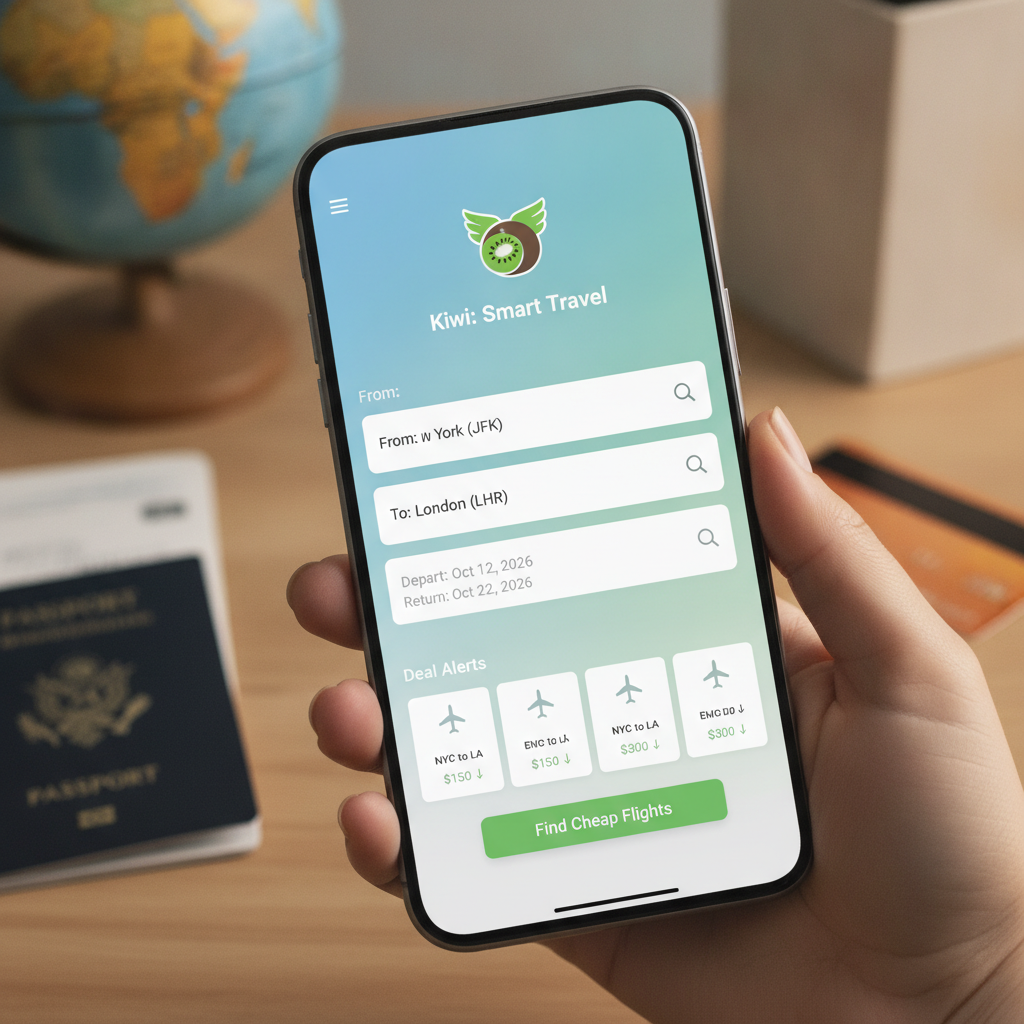
Based on official policies, available platform information, and third-party review patterns, the Kiwi app generally performs as advertised in its core function: finding cheap and unique flight combinations. Our comprehensive Kiwi.com app review confirms its robust search capabilities. The search experience is highly intuitive and remarkably fast, even when processing complex multi-city or 'Nomad' searches across vast datasets of airlines. Users frequently report discovering routes and prices that are genuinely lower than those found on more traditional booking engines or even direct airline websites. The filtering options are extensive, allowing users to refine searches by price, duration, number of stops, airlines, and even specific airports, making it easy to tailor results to individual preferences.
However, the user experience during the booking flow and post-booking can present a more nuanced picture. While the initial search results are compelling, travelers must remain vigilant during checkout. The price transparency can be good, with optional add-ons like baggage, seat selection, and flexible tickets clearly presented, but these can significantly increase the final cost if not carefully considered. It's crucial to understand that the cheapest fares often come with minimal inclusions, meaning checked baggage or even carry-on allowances might be extra, especially on low-cost carriers. This requires the traveler to actively review all selections before final payment to avoid unexpected charges later.
Post-booking, the app excels at itinerary management. Booking confirmations are generally fast, and e-tickets or vouchers are usually delivered promptly. The in-app itinerary provides a centralized hub for all travel details, often including gate changes and delay notifications, which is particularly useful for complex multi-leg journeys. However, the real test of performance often comes with disruptions. While the 'Kiwi.com Guarantee' is designed to protect self-transfer itineraries, user experiences suggest that resolution can sometimes be slower or more complicated than dealing directly with an airline, particularly for urgent, in-trip issues. This is a common trade-off when using an intermediary for complex bookings, and travelers should set appropriate expectations for customer support response times and resolution processes during critical moments. Overall, the app performs exceptionally well for the discovery and initial booking phases, but users must be prepared for potential self-management and patience if travel plans deviate.
Pros and Cons of Using Kiwi
Like any innovative travel platform, the Kiwi app comes with a distinct set of advantages and disadvantages. Understanding these trade-offs is key to determining if it's the right tool for your 2026 travel plans.
Pros:
- Unbeatable Price Discovery: Kiwi's virtual interlining often uncovers the absolute lowest fares by combining flights from various airlines, including low-cost carriers, that other platforms can't. This is a major draw for budget travelers.
- Extensive Route Coverage: The app's ability to stitch together unique itineraries means it offers an unparalleled breadth of routes and connections, opening up travel possibilities to destinations that might otherwise be expensive or difficult to reach.
- Flexible & Advanced Search Tools: Features like 'Nomad' search, flexible date ranges, and 'Anywhere' destination discovery are incredibly powerful for planning complex, multi-city, or spontaneous budget trips.
- Kiwi.com Guarantee for Self-Transfers: This unique protection plan offers a safety net for missed connections on self-transfer itineraries, covering rebooking costs or refunds, which is a significant advantage over booking separate tickets independently.
- User-Friendly App Interface: The app is generally fast, intuitive, and well-designed for searching, filtering, and managing itineraries, making the complex process feel manageable.
- Centralized Itinerary Management: All booking details, documents, and often real-time updates are consolidated within the app, simplifying in-trip management, especially for multi-leg journeys.
- Price Alerts: The ability to set up notifications for price drops on desired routes helps users secure the best deals without constant manual monitoring.
Cons:
- Increased Self-Transfer Risk & Responsibility: While the Kiwi.com Guarantee exists, self-transfer flights mean travelers are responsible for re-checking baggage, potentially clearing customs and immigration, and needing appropriate visas for layovers. Missed connections can still be stressful. This is a significant deal-breaker for risk-averse travelers.
- Complex Refund & Change Processes: Dealing with changes or cancellations for multi-carrier, separate-ticket itineraries through an intermediary can be more complex and time-consuming than direct airline bookings, often dependent on multiple airline policies. This can be a major trade-off for those who value flexibility.
- Potential for Hidden Costs: The initial low price may not include baggage fees, seat selection, or other add-ons, especially with low-cost carriers. Travelers must carefully review all inclusions and exclusions at checkout.
- Customer Support Challenges: While available, customer support for urgent, in-trip issues can sometimes be slower or less direct than contacting a single airline, leading to frustration during disruptions. This can be a deal-breaker for travelers needing immediate assistance.
- Less Direct Airline Relationship: Booking through Kiwi means your primary relationship is with the platform, not directly with the airlines. This can impact loyalty points, direct communication, and access to airline-specific benefits.
- Visa Requirements for Layovers: Self-transfer itineraries, particularly international ones, may require transit visas for layover countries that wouldn't be necessary with a single-ticket booking, adding an extra layer of planning and potential cost.
- Longer Layover Times: To mitigate the risk of missed connections, Kiwi often suggests itineraries with longer layovers, which can extend overall travel time.
Who Should Use the Kiwi App?
The Kiwi app is an invaluable tool for specific types of travelers who align with its strengths and are prepared for its unique model. If you identify with the following profiles in 2026, the Kiwi app should definitely be in your travel toolkit:
- Budget Travelers: If finding the absolute lowest price is your top priority, Kiwi's virtual interlining excels at uncovering cheap flight combinations that other platforms miss. You are willing to accept certain trade-offs for significant savings.
- Flexible Travelers: Those with flexible travel dates or open to exploring different destinations will love Kiwi's 'Anywhere' search and flexible date range options. It empowers spontaneous and cost-effective travel planning.
- Digital Nomads & Long-Term Travelers: For individuals piecing together complex, multi-city itineraries across different countries, Kiwi's ability to optimize routes and discover unique connections can lead to substantial savings over an extended journey. The 'Nomad' search is tailor-made for this lifestyle.
- Experienced & Independent Travelers: If you're comfortable with managing your own connections, understand baggage recheck procedures, and are adept at navigating airports and potential visa requirements for layovers, you'll thrive with Kiwi's model.
- Travelers Seeking Unique Routes: If standard airline routes don't quite fit your needs, or you're looking for an unconventional way to reach a destination, Kiwi's algorithm will likely present options you wouldn't find elsewhere.
- Those Comfortable with Intermediary Support: You understand that booking through an OTA means dealing with them first for issues, and you are patient with resolution processes, especially for complex, multi-carrier bookings.
For these travelers, the potential for significant savings and expanded travel possibilities far outweighs the inherent complexities of self-transfer flights. The Kiwi app acts as a powerful enabler for more adventurous and cost-efficient global exploration in 2026.
Who Should NOT Use Kiwi?
While the Kiwi app offers compelling advantages for some, it's equally important to identify who should steer clear of it. The platform's unique model, while beneficial for budget savings, introduces complexities that are not suitable for every traveler. If you fall into any of the following categories in 2026, you might find the Kiwi app more frustrating than helpful:
- Risk-Averse Travelers: If the thought of a missed connection, especially on a self-transfer itinerary, causes significant anxiety, Kiwi is not for you. Despite the Kiwi.com Guarantee, the responsibility for navigating layovers, baggage, and potential rebookings ultimately falls more heavily on the traveler.
- Travelers Needing Seamless Connections: If you expect your airline to handle all transfers, baggage between flights, and provide immediate assistance in case of delays, a self-transfer booking through Kiwi will not meet your expectations. You'll be booking separate tickets.
- First-Time International Travelers: Navigating customs, immigration, and potential transit visas for layover countries can be daunting. For those new to international travel, the added complexity of self-transfer itineraries can be overwhelming and lead to unforeseen issues.
- Families with Young Children or Large Amounts of Luggage: The logistics of re-checking multiple bags, managing children through security, and dealing with potentially tight layovers on separate tickets can be extremely stressful and impractical for families.
- Travelers Prioritizing Direct Airline Support: If you prefer to deal directly with the airline for all inquiries, changes, or disruptions, booking through an intermediary like Kiwi means an extra layer of communication that can be slower and less efficient for urgent matters.
- Travelers Seeking Maximum Refund Flexibility: While Kiwi offers flexible ticket options, the cheapest fares are often highly restrictive. For travelers who anticipate needing to cancel or change plans frequently without significant penalty, booking directly with an airline's flexible fare or through a traditional OTA with clear, generous policies might be better.
- Business Travelers on Tight Schedules: The potential for delays and the added complexity of self-transfer connections make Kiwi less ideal for business trips where punctuality and minimal hassle are paramount.
For these individuals, the potential savings offered by Kiwi are often outweighed by the increased stress, complexity, and potential for unforeseen issues. A more traditional booking approach that offers greater simplicity and direct accountability would be a better fit.
How Does Kiwi Compare With Typical Alternatives?
When considering the Kiwi app, it's essential to understand how its unique model stacks up against the broader landscape of travel booking alternatives. Kiwi occupies a distinct niche, and its comparison to other generic options highlights its strengths and weaknesses.
| Comparison Point | Kiwi App | Typical Budget Alternative (e.g., direct low-cost carrier) | Standard Online Travel Agency (OTA) | Direct Airline Booking |
|---|---|---|---|---|
| Best For | Complex, cheapest routes with self-transfer | Simple, direct point-to-point flights on a single budget airline | Bundled deals, traditional routes, some support | Max flexibility, loyalty, direct support, simple itineraries |
| Price Discovery | Excellent for unique, lowest-cost combinations | Good for specific routes, but limited to one carrier | Moderate, may show some bundles/deals | Limited to own routes and partners |
| Route Flexibility | Highest (virtual interlining, Nomad search) | Low (point-to-point) | Medium (standard connections) | Medium (own network + partners) |
| Self-Transfer Risk | High (mitigated by Kiwi.com Guarantee) | N/A (unless self-booking separate tickets) | Low (typically single ticket connections) | Low (single ticket connections) |
| Price Transparency | Good, but requires careful review of add-ons | Variable, can have many add-ons | Generally good, but check fees | Excellent, clear breakdown of fare rules |
| Customer Support | Intermediary support, can be complex for disruptions | Variable, often minimal for budget carriers | Generally good, but still an intermediary | Direct, usually most efficient |
| Refund & Change Process | Complex, multi-carrier policies, Kiwi.com Guarantee involved | Strict, often non-refundable for cheapest fares | Dependent on airline rules, processed by OTA | Most straightforward, direct with airline |
| App Experience | Strong for search & itinerary management | Basic for booking & check-in | Good for search & booking | Strong for booking, check-in, in-flight |
| Where to Buy | View Deal |
Compared to a typical budget alternative, such as booking directly with a single low-cost carrier, Kiwi offers far greater route flexibility and the potential for savings on more complex journeys. While a budget airline might be cheapest for a direct flight between two specific cities, Kiwi can piece together a multi-leg international trip that beats the sum of individual budget carrier tickets. However, the direct budget alternative often means simpler logistics if it's a non-stop flight, with less self-transfer risk.
Against a standard online travel agency (OTA), Kiwi's primary advantage is its virtual interlining capability. Most OTAs stick to traditional interline agreements between airlines, limiting their search results. Kiwi breaks this mold, offering a wider array of cheaper, albeit more complex, options. A standard OTA might offer better bundled deals (flight+hotel) or more straightforward customer support for single-ticket bookings, but it won't match Kiwi's route discovery for unconventional connections.
When compared to direct airline booking, Kiwi almost always wins on sheer price discovery for complex itineraries. Booking direct provides the most control, direct access to customer service, loyalty program benefits, and typically the clearest refund policies. However, direct booking means you're limited to that airline's network and partners, often missing out on the unique, cost-saving combinations that Kiwi's algorithm can generate. For simple, direct flights, booking direct remains the lowest-risk and often most convenient option, but for intricate, budget-focused travel, Kiwi presents a compelling alternative.
Pricing and Value for Money with Kiwi
The pricing model of the Kiwi app is designed around its core value proposition: delivering the cheapest possible flight combinations, often through virtual interlining. While the base fares themselves can be exceptionally low, particularly for complex or multi-leg journeys, the true value for money depends heavily on the traveler's diligence in understanding the final cost and the associated trade-offs. Prices change frequently, so check the latest price before buying.
| Pricing Component | How Kiwi Handles It | Impact on Value |
|---|---|---|
| Base Fare | Often finds the lowest published fares by combining carriers. | High initial savings, primary driver of value. |
| Service Fees | Kiwi charges a service fee, typically displayed at checkout. | Can slightly increase the final price, but usually small compared to potential savings. |
| Baggage Fees | Often NOT included in the base fare, especially for low-cost carriers. Must be added. | Significant hidden cost if not accounted for. Can erode savings if multiple bags are needed. |
| Seat Selection | Optional add-on, priced per leg, similar to direct airline booking. | Adds to cost if preferred seats are desired. |
| Flexible Tickets | Optional add-on for greater flexibility (e.g., "Flexi Ticket" for changes). | Increases initial cost, but can offer significant value for uncertain plans. |
| Kiwi.com Guarantee | Often included for virtual interlining, or offered as an upgrade. | Adds value by mitigating self-transfer risks, but is not a full travel insurance. |
| Payment Processing Fees | May apply depending on payment method and region. | Typically minor, but worth checking at checkout. |
| Where to Buy | View Deal |
The value proposition of Kiwi shines brightest for travelers who are meticulous in their booking process. If you can travel light (avoiding checked baggage fees), are flexible with seating, and thoroughly review all add-ons at checkout, the savings on the base fare can be substantial. For example, a complex multi-country trip that might cost $1,500 booking directly with major airlines could potentially be found for $1,000 or less on Kiwi, even after factoring in service fees and a basic carry-on. This significant price reduction is the core of its value.
However, the value can quickly diminish if travelers aren't careful. Forgetting to add baggage, or underestimating the cost of seat selection across multiple flight legs, can quickly negate the initial savings. Furthermore, the 'value' of the Kiwi.com Guarantee, while important, should not be confused with comprehensive travel insurance, which covers a broader range of risks. Ultimately, Kiwi offers excellent value for money for the informed, budget-savvy traveler who is prepared to navigate its specific booking nuances. For those seeking a 'set it and forget it' experience with all-inclusive pricing, the perceived value may be lower, as the effort required to manage potential hidden costs and self-transfer logistics can feel like a premium in itself.
Final Verdict: Should You Download the Kiwi App?
After a thorough review of its features, performance, and user experience in 2026, the final verdict on the Kiwi app is clear: it is a highly valuable tool for a specific segment of the travel market. Its innovative approach to virtual interlining, coupled with powerful search capabilities, positions it as a leader in finding genuinely cheap and unconventional flight itineraries. This Kiwi.com app review concludes that for the adventurous, budget-conscious, and flexible traveler, the Kiwi app is a strong recommendation, offering unparalleled route discovery and significant cost savings.
Buy if...
- You are a budget-conscious traveler whose primary goal is to find the absolute lowest price, even if it means a more complex itinerary.
- You have flexible travel dates or destinations and want to explore unique multi-city routes or spontaneous trips.
- You are an experienced, independent traveler who is comfortable managing self-transfer connections, baggage rechecks, and potential visa requirements for layovers.
- You value advanced search features like the 'Nomad' search and price alerts to optimize your travel planning.
- You understand that booking through an intermediary may involve different customer support processes than booking directly with an airline.
Skip if...
- You are a risk-averse traveler who prioritizes seamless, guaranteed connections and direct airline accountability above all else.
- You are traveling with young children or have a large amount of luggage, as self-transfer logistics can become highly impractical.
- You need maximum refund flexibility and prefer to deal directly with airlines for all changes and cancellations.
- You are a first-time international traveler or prefer a simple, straightforward booking process without added complexities.
- You are a business traveler on a tight schedule where punctuality and minimal hassle are paramount.
Wait for a sale if...
- Kiwi doesn't typically have "sales" in the traditional sense, as its prices are dynamic. Instead, use its price alert feature to monitor your desired routes and book when the fare drops to your target price. This is the equivalent of "waiting for a sale" for this platform.
Overall, the Kiwi app earns its 8.1/10 rating by delivering on its promise of cheap flights and unique routes for the right user. It's not a universal solution, but for those who fit its ideal traveler profile, it's an indispensable tool for unlocking new travel possibilities in 2026. Before making your final decision, always use the app to compare prices and carefully review all terms and conditions, especially regarding baggage and the Kiwi.com Guarantee, to ensure it aligns with your specific travel needs.
Check the latest flight deals and unique routes on Kiwi.
Frequently Asked Questions
Yes, Kiwi is a legitimate online travel agency that has been operating for many years. It is safe to book with in 2026, but travelers must understand its unique 'virtual interlining' model. While payment security is standard, the safety of your itinerary depends on your awareness of self-transfer risks like baggage recheck and potential visa requirements for layovers. Always review the Kiwi.com Guarantee details and ensure you understand the terms for complex bookings before purchasing.
Often, yes, especially for complex or multi-leg international itineraries. Kiwi's virtual interlining technology combines flights from various airlines, including low-cost carriers, to create unique and often significantly cheaper routes that are not available through direct airline bookings. However, for simple, direct flights, booking directly with an airline might offer comparable or sometimes even better prices, along with greater simplicity and direct customer support. Always compare the final checkout price on Kiwi, including all fees and add-ons, against direct airline options.
If your flight is cancelled or delayed, the outcome depends on whether you have a self-transfer itinerary and if you opted for the Kiwi.com Guarantee. For guaranteed bookings, Kiwi commits to rebooking you on an alternative flight or providing a refund if rebooking isn't possible. However, the process can be more complex and potentially slower than dealing directly with a single airline, especially for multi-carrier routes. For non-guaranteed bookings, you are responsible for managing disruptions directly with each airline involved.
Kiwi generally offers good price transparency, clearly displaying service fees, taxes, and optional add-ons like baggage, seat selection, and flexible tickets during the checkout process. However, the initial search price often does not include baggage fees, especially for low-cost carriers, which can be a significant 'hidden' cost if not accounted for. Travelers must carefully review all inclusions and exclusions before final payment to understand the total cost. Payment processing fees may also apply depending on the method used.
The Kiwi app can be challenging for families or travelers with specific accessibility needs due to its reliance on self-transfer itineraries. Managing multiple bags, young children, or mobility aids through potentially tight connections, customs, and immigration on separate tickets can be highly stressful. While Kiwi's search filters might not specifically address all accessibility requirements, the platform's core model is generally better suited for independent, flexible travelers who can navigate potential complexities. Direct airline bookings or specialized travel agencies might be more appropriate for these groups.
Travelers who are risk-averse, prefer seamless connections, or require direct airline accountability should generally avoid the Kiwi app. It's not ideal for those who need maximum refund flexibility, struggle with managing baggage rechecks, or are unfamiliar with potential visa requirements for layovers on self-transfer itineraries. First-time international travelers, families with young children, or business travelers on tight schedules may also find the complexities introduced by Kiwi's model to be more of a hindrance than a help. Simpler, direct booking options may be a better fit.
For finding cheap flights, the 'best' alternative depends on your priorities. If you prefer traditional interline connections and direct airline support, a standard online travel agency (OTA) or booking directly with major airlines would be suitable. For simple point-to-point flights, going directly to a low-cost carrier's website can be cheapest. Metasearch engines can also compare prices across many providers without the self-transfer complexities. Each alternative offers different trade-offs in terms of price, flexibility, and support compared to Kiwi's unique virtual interlining approach.