The Ultimate Guide: 15+ Essential Travel Accessories You Actually Need for a Long Journey

The Ultimate Guide: 15+ Essential Travel Accessories You Actually Need for a Long Journey
The intoxicating thrill of planning a long journey - one where weeks blur into months - is often followed by a creeping sense of dread: packing. Staring at an empty suitcase, the question looms large. What do you actually need to survive and thrive for an extended period away from home? The internet, with its endless lists of "must-have" gadgets and miracle products, can quickly turn excitement into overwhelming anxiety. The challenge lies in identifying the truly essential travel accessories for a long journey from the endless list of "nice-to-haves".
The secret to mastering the art of packing for a long-term trip isn't about having more; it's about having the right things. It's a strategic process of choosing versatile, durable, and space-saving accessories that solve real, on-the-road problems. It's about building a travel kit that empowers you, reduces stress, and allows you to focus on the adventure itself, not on the gear you're hauling around.
This comprehensive guide is designed to cut through the noise. We will move beyond simple checklists and dive deep into the 'why' and 'how' behind each recommendation. We'll explore the essential categories - from the technology that keeps you connected to the comfort items that make a 16-hour bus ride bearable. You will learn how to organize your belongings efficiently, keep your health in check, and protect your valuables from unforeseen risks. By the end, you'll have a clear, actionable framework for building a packing list that is both minimalist and incredibly effective, setting you up for a smoother, smarter, and more enjoyable long journey.
What Are the Most Crucial Electronics for Long-Term Travel?
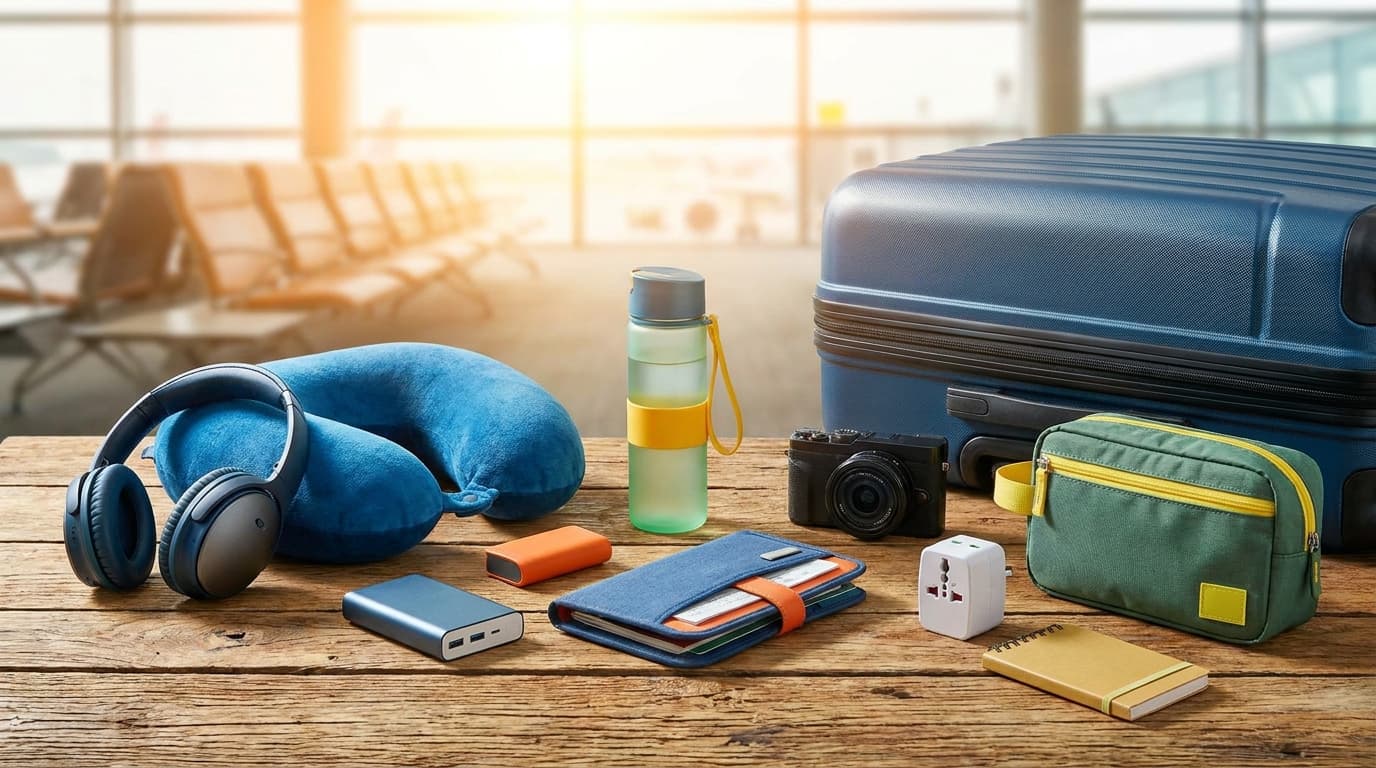
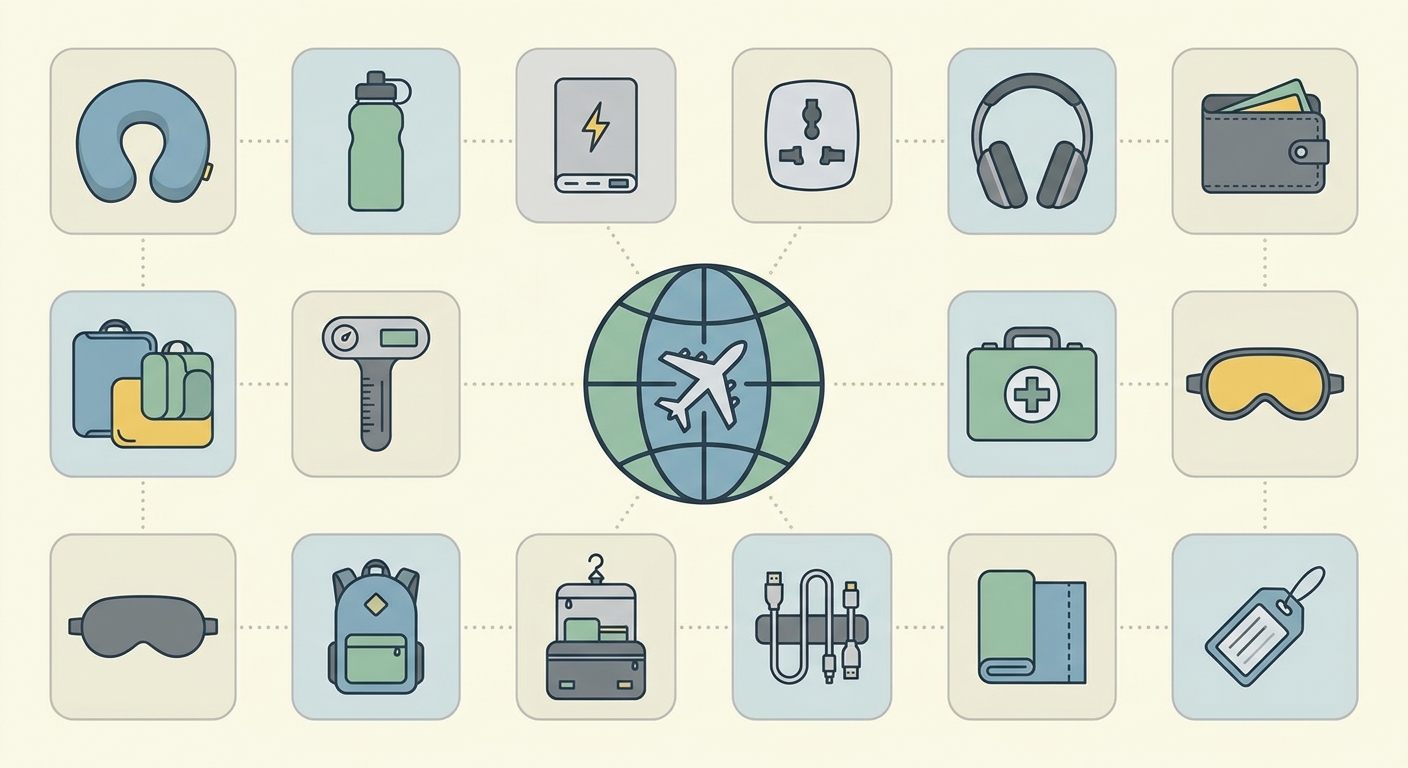
The most crucial electronics for long-term travel are a high-capacity portable power bank, a universal travel adapter, a quality pair of noise-canceling headphones, and an e-reader. This core group of four ensures your primary devices remain charged, functional across borders, and provide both entertainment and tranquility without adding significant bulk or complexity to your pack. Alongside this hardware, managing your connectivity with a digital solution like an eSIM for travel can also be a game-changer.
A reliable portable power bank is non-negotiable. For extended travel, aim for a capacity between 10,000 and 20,000 mAh. This range offers the sweet spot between providing multiple phone charges (typically 2-4 full charges) and being light enough to carry daily. Look for models with modern features like USB-C Power Delivery (PD) for fast charging of compatible phones and even some laptops, along with at least one traditional USB-A port for flexibility. Pass-through charging, which allows you to charge the power bank while it simultaneously charges another device, is an incredibly useful feature for overnight stays with limited outlets.
Next is the universal travel adapter. Instead of carrying a confusing bundle of separate plugs, a single, all-in-one unit is the superior choice. A good adapter will have sliders or rotating mechanisms to switch between the main plug types used globally (Type A for North America/Japan, Type C for Europe, Type G for the UK, and Type I for Australia/China). The best models also integrate multiple USB ports directly into the adapter, transforming a single wall socket into a charging hub for your phone, headphones, and power bank all at once. This single accessory eliminates a major source of travel stress.
Noise-canceling headphones are more than a luxury; they are a sanctuary. Whether you're on a roaring airplane, a rattling overnight train, or trying to focus in a noisy cafe, the ability to block out ambient sound is transformative. Over-ear models generally offer the best noise cancellation and comfort for long periods, while in-ear earbuds are more compact and discreet. Investing in a good pair can dramatically improve your sleep quality, reduce travel fatigue, and make your journey infinitely more pleasant.
Finally, an e-reader like a Kindle is a long-term traveler's best friend. While the romance of a physical book is undeniable, the practicality is not. An e-reader can hold thousands of books in a device that weighs less than a single paperback. Its E-ink screen is easy on the eyes, the battery life lasts for weeks, and a built-in backlight means you can read in a dark hostel dorm without disturbing anyone. It's the most space- and weight-efficient way to carry an entire library with you.
How Can You Keep Your Luggage Organized on a Long Journey?
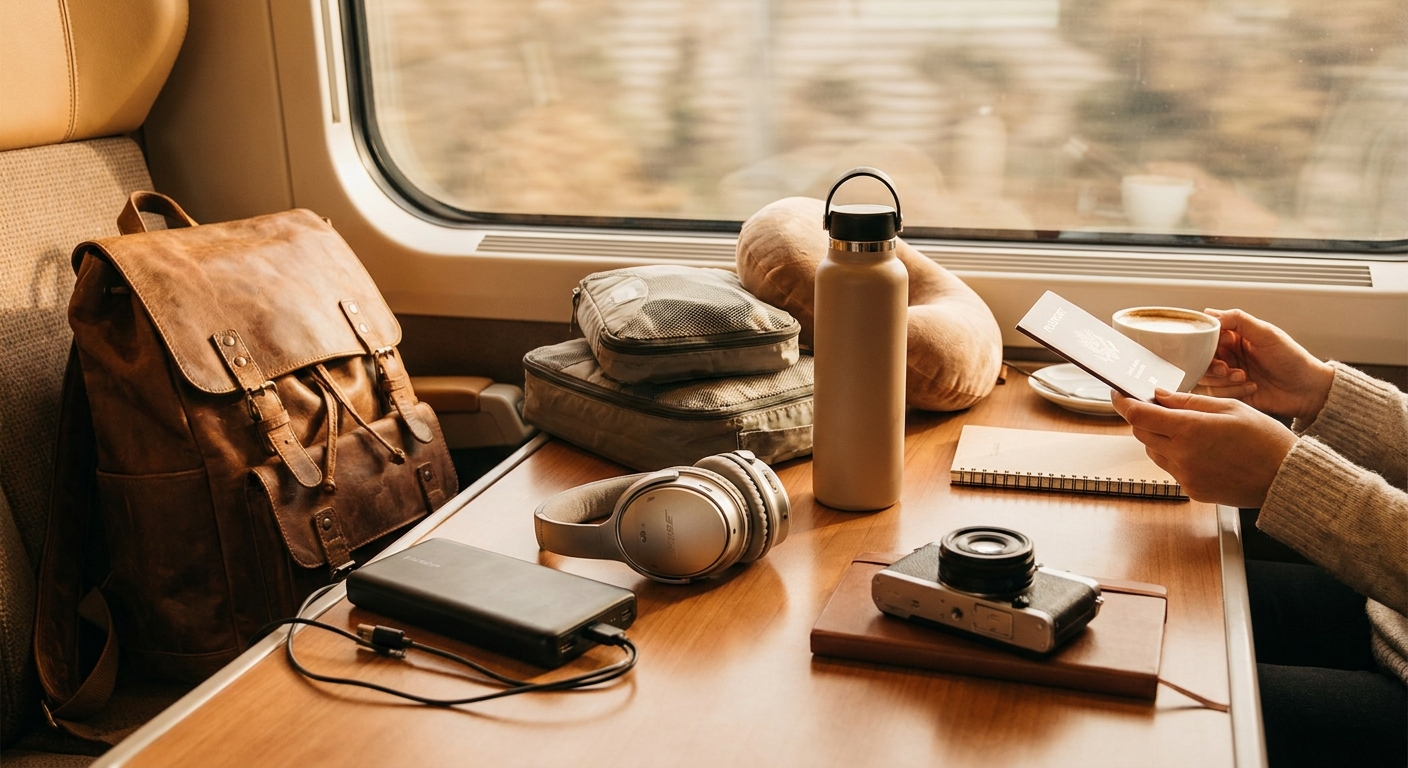
The most effective way to keep your luggage organized on a long journey is to adopt a modular system using packing cubes, a dedicated hanging toiletry bag, and a specialized electronics organizer. This "divide and conquer" approach transforms your main bag from a chaotic jumble into a well-ordered chest of drawers, allowing you to find any item in seconds without unpacking everything you own.
Packing cubes are the cornerstone of this system. These zippered fabric containers allow you to compartmentalize your belongings by category. For example, you can use one large cube for pants and sweaters, a medium one for shirts and t-shirts, and a small one for socks and underwear. This not only keeps things tidy but also allows you to pack and unpack with incredible speed. When you arrive at your accommodation, you simply transfer the cubes into a drawer or onto a shelf. For maximum efficiency, consider compression packing cubes, which have an extra zipper that squeezes out excess air, significantly reducing the volume of bulky items like jackets and sweaters.
A hanging toiletry bag, often called a Dopp kit, is another game-changer, especially for travelers staying in hostels or budget guesthouses where bathroom counter space is non-existent. These bags unfold to reveal multiple compartments and feature a built-in hook, allowing you to hang them from a towel rack, doorknob, or even a bunk bed frame. This keeps all your toiletries visible, accessible, and off wet or unclean surfaces. Look for one with a mix of zippered pockets and elastic loops to secure items of different sizes and prevent leaks.
The third pillar of organization is an electronics organizer. In today's world, travelers carry a multitude of cables, chargers, adapters, memory cards, and power banks. Letting these items roam free in your bag inevitably leads to a tangled mess and a frantic search for the right cable. A dedicated organizer - a small, padded case with a series of elastic loops, mesh pockets, and zippered compartments - keeps all your tech accessories securely in one place. It protects them from damage and saves you the frustration of untangling a knot of wires every time you need to charge your phone. This makes it one of the most important essential travel accessories for a long journey.
As a real-world example, imagine you've just finished a long travel day and arrived at your hostel after dark. Your dorm mates are already asleep. Instead of rustling through plastic bags and emptying your entire backpack to find your toothbrush and a charging cable, you quietly unzip your bag, pull out your self-contained toiletry bag and your electronics organizer. In less than a minute, you have everything you need without disturbing anyone, a small but significant victory for the organized traveler.
What Health and Hygiene Items Should You Never Forget?
For any long journey, you should never forget a well-stocked first-aid kit, solid toiletries to minimize leaks and save space, a reliable water purification method, and a quick-dry microfiber towel. These four categories of items form the foundation of staying healthy, clean, and comfortable on the road, addressing common travel ailments and hygiene challenges proactively.
A personalized first-aid kit is arguably the most critical health accessory. While you can buy pre-made kits, it's best to customize one for your needs and destination. Essential components include: assorted bandages and sterile gauze, antiseptic wipes, medical tape, pain relievers (like ibuprofen or paracetamol), antihistamines for allergic reactions, motion sickness medication, and any personal prescription medications with a copy of the prescription. Also include blister treatment (like Moleskin), insect repellent containing DEET or Picaridin, and a small tube of hydrocortisone cream for bites and rashes. Having these items on hand can turn a potential trip-ruining issue into a minor inconvenience.
Switching to solid toiletries is a revolutionary packing hack for long-term travel. Solid shampoo bars, conditioner bars, soap bars, and even solid toothpaste tablets eliminate the risk of messy leaks inside your luggage. They are also highly concentrated, meaning a small bar lasts much longer than its liquid equivalent, saving you money and frequent trips to the pharmacy. Crucially, they are not subject to the 100ml (3.4oz) liquid restrictions for carry-on luggage, simplifying your airport security experience. Store them in reusable tins to keep them dry and clean between uses.
A reliable water purification method provides both safety and savings. While bottled water is widely available, the cost adds up, and the plastic waste is environmentally damaging. A portable water filter, like a Lifestraw or Sawyer Squeeze, physically removes bacteria and protozoa, allowing you to safely drink from taps, rivers, and streams. Another excellent option is a UV water purifier (like a SteriPEN) which uses ultraviolet light to neutralize viruses and bacteria. For ultimate convenience, consider a water bottle with a built-in filter. This single item gives you the freedom and confidence to stay hydrated anywhere in the world.
Finally, a quick-dry microfiber towel is an indispensable accessory. Standard cotton towels are bulky, heavy, and take forever to dry, making them a breeding ground for mildew in a backpack. A microfiber travel towel, in contrast, is incredibly lightweight, packs down to a fraction of the size, and can absorb several times its weight in water. Most importantly, it air-dries in a couple of hours, meaning you can shower in the morning and pack it away without worrying about a damp, smelly mess. Choose a large or extra-large size for comfort; it will still be smaller and lighter than a regular bath towel.
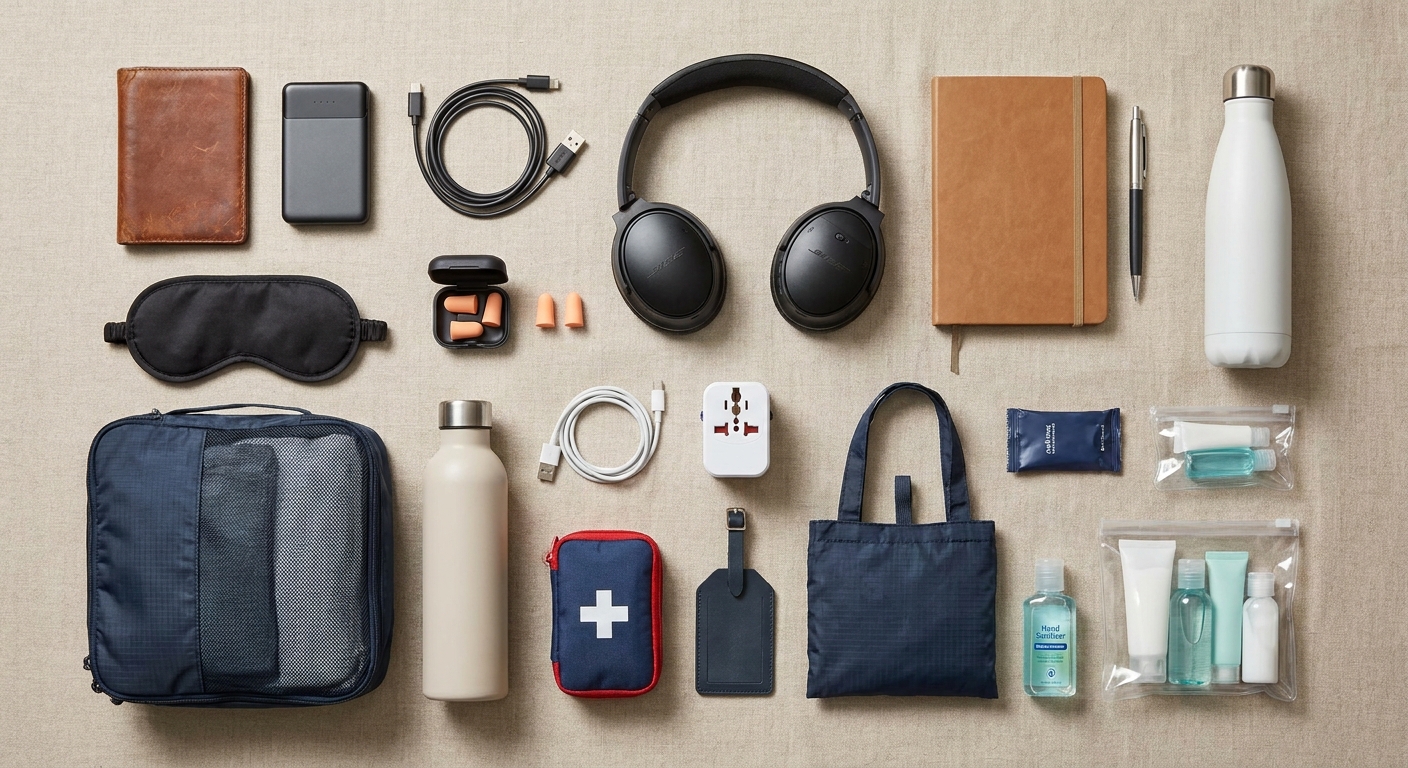
Which Accessories Provide the Best Comfort on Long Flights and Bus Rides?
The best accessories for ensuring comfort on long flights, bus rides, or train journeys are a high-quality travel pillow, a contoured eye mask, effective earplugs or noise-canceling headphones, and a pair of compression socks. This combination, often called a "sleep kit," directly targets the main obstacles to comfort and rest during transit: lack of head support, disruptive light, noise, and poor circulation.
A good travel pillow is the most important component. Forget the flimsy, bead-filled U-shaped pillows found at airport kiosks. For true comfort, invest in a pillow made from memory foam or one with an inflatable, ergonomic design. Memory foam provides superior support by contouring to your neck and shoulders, while modern inflatable pillows offer adjustable firmness and pack down to an incredibly small size. Some innovative designs, like the Trtl pillow, look more like a scarf but provide scientifically proven neck support, preventing your head from bobbing forward as you doze off.
A contoured eye mask is the next essential piece. Standard, flat eye masks can press against your eyelids, which can be uncomfortable and disrupt REM sleep. A contoured, 3D mask features molded cups over the eyes, creating a pocket of total darkness without any pressure. This allows you to blink freely and experience a more natural sleep cycle, making it far more effective at blocking out the cabin lights or the reading light of the passenger next to you. Look for one with an adjustable strap to ensure a snug but comfortable fit.
To combat noise, you have two primary options: simple earplugs or the previously mentioned noise-canceling headphones. High-fidelity foam or silicone earplugs are a cheap, lightweight, and surprisingly effective way to block out the drone of an engine or chatter from other passengers. For those who want to completely escape, noise-canceling headphones are the premium choice. They not only block sound but also allow you to listen to calming music, podcasts, or white noise, creating your own private bubble of tranquility.
Finally, compression socks are a crucial but often overlooked accessory for health and comfort on long journeys. Sitting for extended periods can lead to poor circulation, causing your feet and ankles to swell and increasing the risk of deep vein thrombosis (DVT). Compression socks apply gentle pressure to your lower legs, promoting blood flow and reducing swelling and fatigue. They make a noticeable difference in how your legs feel upon arrival, helping you feel more refreshed and ready to explore.

How Do You Ensure Your Valuables and Personal Information Stay Safe?
To ensure your valuables and personal information stay safe during a long journey, you must employ a multi-layered security strategy. This includes using discreet anti-theft bags or money belts for daily carry, protecting your cards with an RFID-blocking wallet, securing your luggage with TSA-approved locks, and considering a portable travel safe for extra peace of mind in your accommodation.
The first line of defense is how you carry your most important items - passport, cash, and credit cards. A traditional money belt worn under your clothes remains a classic and effective solution for keeping these items completely hidden. For those who prefer quicker access, an anti-theft bag (such as a crossbody bag or small backpack) is an excellent alternative. Brands like Pacsafe or Travelon design these bags with integrated security features like slash-proof fabric containing a steel mesh, lockable zippers to deter pickpockets, and anchor straps that can be secured to a fixed object like a chair or table leg.
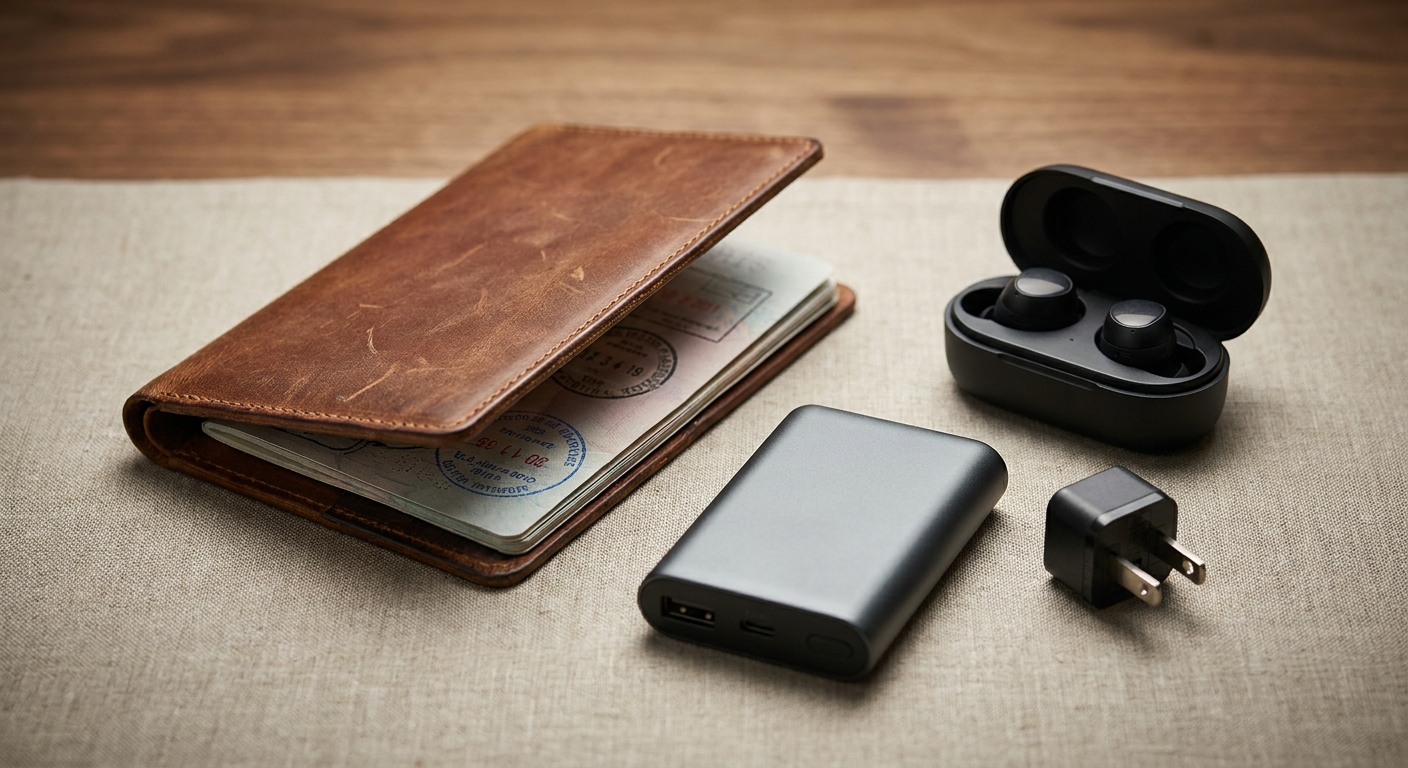
Protecting your digital information is just as important as protecting your physical cash. Modern passports and credit cards contain RFID (Radio-Frequency Identification) chips that can be wirelessly skimmed by thieves with special readers. An RFID-blocking wallet or card sleeve contains a layer of material that blocks these radio waves, preventing unauthorized access to your personal data. This is a simple, inexpensive accessory that provides a crucial layer of digital security against electronic pickpocketing.
For your main luggage, TSA-approved travel locks are a must. These locks secure the zippers of your suitcase or backpack, acting as a strong deterrent against opportunistic theft in transit or in storage. The "TSA-approved" designation means that security agents in the US (and many other countries) have a master key to open the lock for inspection without breaking it. Using a non-approved lock may result in it being cut off if a search is required. For added security, consider a flexible cable lock, which can be used not only on your bag but also to secure it to a luggage rack on a train or a fixture in your hotel room.
For the ultimate security within your room, a portable travel safe is a worthwhile investment. These are typically made from slash-resistant fabric and have a steel cable that allows you to lock the bag itself and then secure it to a permanent fixture like a pipe or a heavy piece of furniture. It's perfect for storing your laptop, camera, spare cash, and passport when you're out for the day, especially in accommodations that lack an in-room safe. While these physical accessories protect your belongings, it's also wise to protect your entire trip with comprehensive coverage. Understanding if travel insurance is necessary for your journey is a crucial step in risk management.
What Kind of Luggage is Best Suited for an Extended Trip?
When considering the essential travel accessories for a long journey, the very bag you carry them in is a critical choice. The best kind of luggage for an extended trip depends heavily on your travel style, but the choice typically comes down to a high-quality travel backpack or a durable rolling suitcase. A travel backpack offers superior mobility and versatility for adventurous, multi-destination journeys, while a rolling suitcase provides convenience and ease of transport for city-based or single-destination travel. The key is to choose one that aligns with the realities of your itinerary.
A travel backpack is the preferred choice for backpackers, hostel-hoppers, and anyone whose itinerary involves varied terrain. Its greatest advantage is mobility; you can easily navigate cobblestone streets, crowded train stations, and endless flights of stairs without a second thought. Modern travel backpacks are designed for comfort and organization. Look for a front-loading (or clamshell) design, which opens like a suitcase, allowing easy access to all your gear without having to dig from the top. A padded, adjustable harness system with a supportive hip belt is crucial for transferring the load's weight from your shoulders to your hips, making it comfortable to carry for longer periods. For size, 40-50 liters is often the sweet spot, as it's large enough for essentials but small enough to be manageable and often qualify as a carry-on.
A rolling suitcase, particularly a four-wheeled spinner, excels in controlled environments like airports, hotels, and paved city streets. It glides effortlessly, placing zero strain on your body. This makes it ideal for business travelers, resort vacationers, or those who plan to use taxis and stay in accommodations with elevators. When choosing a suitcase for a long trip, durability is paramount. Hardshell cases made from polycarbonate are lightweight and impact-resistant, while high-denier ballistic nylon softshell cases offer more flexibility and external pockets. Pay close attention to the quality of the wheels and the telescoping handle, as these are the most common points of failure.
To help you decide, here is a direct comparison:
| Feature | Travel Backpack | Rolling Suitcase (Spinner) |
|---|---|---|
| Mobility | Excellent on varied terrain (cobblestones, stairs, unpaved roads). | Smooth on flat surfaces (airports, hotels). Struggles on uneven ground. |
| Packing Style | Top-loading or clamshell. Encourages minimalist packing. | Clamshell opening. Easier to see all contents at once. |
| Comfort | Carried on your back. Weight is a major factor. A good hip belt is crucial. | Wheeled, minimal strain on your body. Can be tiring to pull for long distances. |
| Durability | Fewer moving parts to break. Focus on fabric quality (ripstop) and zippers (YKK). | Wheels and handles are common points of failure. Hardshell can crack, softshell can tear. |
| Best For | Hostel-hopping, adventurous travel, multi-destination trips with varied transport. | City breaks, business travel, resort stays, trips with minimal transit. |
Ultimately, the best choice is a personal one. Consider your planned activities and modes of transport. If you'll be hopping on and off chicken buses in Guatemala, a backpack is the clear winner. If you're spending three months exploring the cities of Europe via high-speed rail, a spinner suitcase might be the more comfortable and convenient option.
Why is a Reusable Water Bottle an Absolute Must-Have?
A reusable water bottle is an absolute must-have for any long journey because it delivers significant benefits across three key areas: environmental responsibility, cost savings, and personal health. It is one of the simplest and most impactful accessories a traveler can carry, transforming how you hydrate on the road while positively affecting your wallet and the planet.
From an environmental perspective, the impact is staggering. A single traveler on a three-month trip could easily consume hundreds of single-use plastic water bottles. These bottles contribute to overflowing landfills, ocean pollution, and the unnecessary consumption of fossil fuels for their production and transport. By carrying a reusable bottle and refilling it from safe sources, you are actively choosing to reduce your plastic footprint and travel more sustainably. It's a small personal action that, when multiplied by millions of travelers, creates a massive collective benefit for the destinations we love to visit.
The cost savings are equally compelling. Buying bottled water every day, while seemingly inexpensive on a per-unit basis, adds up to a significant expense over the course of a long trip. In many countries, a bottle of water can cost $1-2. Over 90 days, that could easily amount to over $100-$200 spent on something that is often available for free or at a very low cost from filtered water stations in hotels, hostels, cafes, or public fountains. A reusable bottle pays for itself within the first week or two of your journey and continues to save you money every single day thereafter.
Finally, carrying your own bottle is beneficial for your health and hydration. Having water readily available at all times encourages you to drink more frequently, which is crucial for staying energized, combating jet lag, and remaining healthy, especially in hot climates. It also gives you control over your water source. You can choose to fill up from sources you trust. For travel in regions where tap water isn't potable, you can pair your reusable bottle with a purification system, such as a UV sterilizer or a filter, ensuring you always have access to safe, clean drinking water without having to rely on potentially suspect bottled water sources.
There are several types of bottles to consider. An insulated stainless steel bottle keeps water cold for hours, a true luxury on a hot day. A collapsible silicone bottle is fantastic for saving space in your daypack when empty. And a bottle with an integrated filter, like those from Grayl or Lifestraw, provides an all-in-one solution for both carrying and purifying water on the go.
What Underrated 'Miscellaneous' Items Can Be Lifesavers?
Several underrated miscellaneous items can be absolute lifesavers on a long journey, often proving their worth in unexpected situations. The most valuable of these are a small roll of duct tape, a headlamp, a travel clothesline, a few carabiner clips, and a portable digital luggage scale. These items are small, lightweight, and solve a surprising number of common travel problems.
Duct tape is the ultimate multi-purpose repair tool. Instead of packing a full roll, wrap a few feet of it around a pen or your water bottle. Its uses are nearly limitless: patching a hole in your backpack, repairing a broken sandal strap, sealing a leaking shampoo bottle, or even serving as a makeshift bandage in a pinch. It's a miracle worker in a tiny package. A real-world scenario: your rolling suitcase handle gets stuck in the extended position just before a flight. A few wraps of duct tape secure it, allowing you to check your bag and avoid a costly repair or replacement.
A headlamp is far superior to your phone's flashlight. It keeps your hands free, which is invaluable when navigating a dark path, searching through your bag in a dim hostel dorm without waking others, or reading a book on an overnight bus. It's also crucial during power outages, which can be common in some parts of the world. Choose a small, lightweight LED model with an adjustable beam and a red light mode, which preserves your night vision and is less disruptive to others.
A travel clothesline allows you to do laundry anywhere, saving you money on expensive laundry services. Modern travel clotheslines don't require clothespins; they are typically made of two braided elastic cords that you can tuck your clothes into. Many come with suction cups or hooks on the ends, allowing you to string them up in a bathroom, on a balcony, or between two bunk beds. This simple item gives you the freedom to wash a few items as you go, ensuring you always have clean socks and underwear.
Carabiner clips are deceptively useful. These simple metal loops can be used to attach items to the outside of your backpack, such as a wet towel, a pair of shoes, or your water bottle, freeing up internal space. You can also use them inside your hostel to hang your toiletry bag from your bunk or clip your daypack to your main luggage for easier transport through an airport. Pack two or three of varying sizes; you'll be surprised how often you reach for them.
Lastly, a portable digital luggage scale can save you a significant amount of money and stress. Many budget airlines have strict weight limits for both checked and carry-on baggage, with exorbitant fees for overweight bags. A small digital scale allows you to check your bag's weight before you get to the airport, giving you time to redistribute items or leave souvenirs behind if necessary. It eliminates the anxiety-inducing guessing game at the check-in counter.
How Should You Strategically Choose Your Clothing and Footwear?
Strategically choosing clothing and footwear for a long journey revolves around the principles of layering, versatility, and high-performance fabrics, with a focus on merino wool. The goal is to create a compact, cohesive travel wardrobe that can adapt to a wide range of climates and activities, rather than packing a separate outfit for every potential scenario.
The layering system is the core concept. Instead of packing bulky, single-purpose items like a heavy winter coat, you pack multiple thinner layers that can be combined. A typical system includes: a base layer (like a t-shirt or long-sleeve shirt) to wick moisture, a mid-layer (like a fleece or thin down jacket) for insulation, and an outer shell (a waterproof, windproof rain jacket) for protection from the elements. This system allows you to adapt to fluctuating temperatures throughout the day. A cool morning might require all three layers, while a sunny afternoon may only call for the base layer.
When it comes to fabric, merino wool is the undisputed champion for travel. Unlike cotton, which absorbs moisture and takes a long time to dry, and synthetics, which can get smelly quickly, merino wool is a super-fabric. It is naturally temperature-regulating (keeping you cool in the heat and warm in the cold), moisture-wicking, and remarkably odor-resistant. You can wear a merino wool shirt for several days without it smelling, which means you can pack fewer items and do laundry less often. Investing in two or three merino wool t-shirts, a pair of socks, and a base layer will revolutionize your travel wardrobe.
For other clothing, prioritize versatility. Choose items in neutral, complementary colors that can be mixed and matched to create multiple outfits. Pack pants that are comfortable enough for a long bus ride but look smart enough for a nice dinner. Convertible pants that zip off into shorts are a great space-saving option for varied climates. For women, a versatile dress or skirt can be dressed up or down. The key is to avoid "just in case" items. Every piece of clothing should serve multiple purposes.
Footwear is arguably the most important and personal choice. You should limit yourself to a maximum of three pairs. First, a pair of comfortable, durable, and already broken-in walking shoes that you can wear all day, every day. Second, a pair of sandals or flip-flops that can serve as shower shoes, beachwear, or casual evening footwear. Third, an optional pair depending on your plans - this could be a pair of trail runners for hiking or a slightly dressier pair of flats or loafers for city exploration. Never bring brand-new shoes on a long trip; blisters are a guaranteed way to ruin your plans.
By adhering to these principles, you can build a travel wardrobe that is lightweight, adaptable, and highly efficient, freeing up precious space in your luggage for more important things.
Embarking on a long journey is one of life's most enriching experiences, and the preparation phase is the first step of that adventure. While the task of packing can seem monumental, it becomes manageable when you approach it with a clear strategy. The core principle is not to pack for every possibility, but to pack a curated set of tools that provides you with versatility and problem-solving capabilities. The essential travel accessories for a long journey detailed in this guide - from the organizational power of packing cubes to the life-saving potential of a water filter - are not just items, but enablers of a smoother, safer, and more comfortable travel experience.
Remember that the perfect packing list is a personal and evolving document. What works for a trek through Southeast Asia may need adjustments for a cultural tour of Europe. The key is to understand the fundamental categories of need: power and connectivity, organization, health and hygiene, comfort in transit, personal security, and an adaptable wardrobe. By building your kit around these pillars, you create a foundation of preparedness that allows you to handle the unexpected with confidence. You shift your focus from worrying about what's in your bag to engaging with the world around you.
Ultimately, smart packing is about freedom. It's the freedom from the burden of an overweight bag, the freedom from the stress of disorganization, and the freedom from the anxiety of being unprepared. As you lay out your gear, critically assess each item. Does it serve multiple purposes? Is it durable and reliable? Does it solve a real problem you are likely to face? If the answer is yes, it has earned its place among your essential travel accessories for a long journey. Pack light, pack smart, and set forth on your journey with the quiet confidence that you have everything you actually need, and nothing you don't.
Frequently Asked Questions
Packing for 3 months in a carry-on requires a minimalist mindset and strategic gear choices. The key is using compression packing cubes to maximize space and choosing a wardrobe based on versatile, layerable merino wool clothing that resists odor. Opt for solid toiletries to avoid liquid restrictions and save space. A quick-dry towel is essential. You must be disciplined, packing only multi-purpose items and committing to doing laundry regularly. This approach forces you to carry only what is truly necessary, resulting in a lighter, more mobile travel experience and saving you money on checked bag fees.
Yes, packing cubes are absolutely worth it for long trips. Their value goes far beyond simple organization. They compartmentalize your luggage, allowing you to find specific items without destroying your carefully packed bag. This is especially useful when living out of a backpack for weeks or months. Compression cubes offer the added benefit of reducing the volume of your clothes, freeing up space for other essentials. For long-term travel where you're frequently moving between locations, the time and stress saved by having an organized, accessible bag makes packing cubes one of the most valuable accessories you can own.
While it's tough to pick just one, the most indispensable travel accessory for many seasoned travelers is a high-capacity portable power bank (10,000-20,000 mAh). In our digitally-connected world, your smartphone is your map, camera, communication device, and boarding pass. A dead phone can leave you stranded or unable to access crucial information. A power bank provides independence from wall outlets, ensuring you can stay connected and safe during long transit days, power outages, or outdoor adventures. It's a small item that provides immense peace of mind and utility on any long journey.
The best way to carry money long-term is to diversify. Never keep all your funds in one place. Carry a small amount of local currency for daily expenses in a regular wallet. Keep a larger emergency stash of cash (e.g., $100-200 USD) hidden in a money belt or deep within your luggage. Use a primary debit card for ATM withdrawals and a primary credit card for larger purchases (preferably one with no foreign transaction fees). Additionally, carry at least one backup credit card and one backup debit card, stored separately from your primary cards, in case of loss or theft.
Whether to bring a laptop depends entirely on your needs. If you are a digital nomad, photographer, or blogger who needs to work, a lightweight laptop is essential. However, if you are traveling purely for leisure, a laptop often becomes a heavy, valuable burden that you constantly worry about. Modern smartphones and tablets can handle most travel-related tasks like booking flights, managing finances, and staying in touch. For a leisure trip, consider leaving the laptop at home to disconnect more fully and reduce the weight and risk associated with your pack.