

Kiwi Nomad: Your Essential Guide to Multi-City Trip Planning
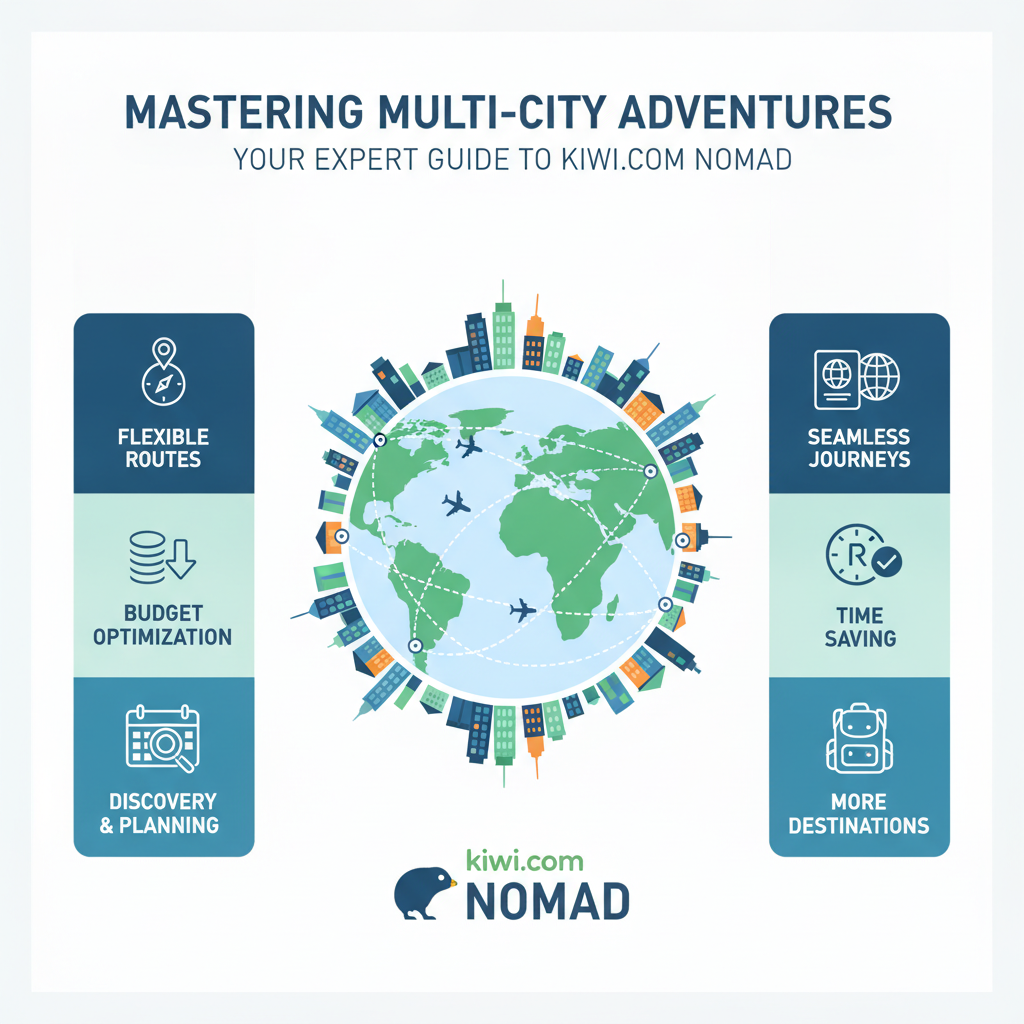
Mastering Multi-City Adventures: Your Expert Guide to Kiwi.com Nomad
Embarking on a multi-city adventure promises unparalleled exploration and diverse experiences, but the logistics of booking complex itineraries can often feel like a daunting puzzle. Traditional booking methods frequently lead to exorbitant costs or frustrating limitations, especially when trying to connect disparate destinations with different airlines. This is where Kiwi Nomad emerges as a game-changer, offering an innovative approach to crafting multi-stop journeys that prioritize flexibility and affordability. Designed for the adventurous and budget-conscious traveler, Kiwi Nomad leverages Kiwi.com's powerful virtual interlining technology to discover unique flight combinations that traditional search engines often miss, piecing together seemingly unrelated flights from various carriers into a single, cohesive, and often significantly cheaper itinerary. This comprehensive guide will equip you with the knowledge and actionable strategies to fully harness the power of Kiwi.com Nomad, demystifying its unique features, outlining its benefits and inherent risks, and providing expert tips to ensure your next multi-city trip is not only memorable but also remarkably efficient and cost-effective.
Throughout this article, we will delve into the intricacies of how Kiwi.com Nomad works, walking you through the step-by-step process of planning and booking your dream itinerary. We will explore its unique ability to combine flights from different airlines, including low-cost carriers, to create routes that might otherwise be impossible or prohibitively expensive. Understanding the concept of virtual interlining and the associated self-transfer risks is crucial, and we will provide clear guidance on how to navigate these with confidence, leveraging tools like the Kiwi.com Guarantee. By the end of this deep dive, you will possess a robust understanding of how to optimize your search, manage potential challenges, and ultimately unlock a world of affordable multi-city travel possibilities, transforming what once seemed complex into an exciting, achievable reality.
What Exactly is Kiwi Nomad and How Does it Work?
Kiwi.com Nomad is an advanced multi-city flight search tool that specializes in finding the cheapest possible routes for complex, multi-stop itineraries by leveraging a unique technology called virtual interlining. It works by combining flights from different airlines, including budget carriers that typically do not cooperate, to construct a single itinerary that often undercuts traditional booking methods.
At its core, Kiwi Nomad operates on the principle of virtual interlining, a sophisticated algorithm that scans millions of flight combinations from various airlines globally, including those that do not have official codeshare agreements. Unlike conventional flight search engines that primarily look for direct connections or established partnerships between airlines, Nomad acts as a digital travel hacker, piecing together individual flight segments from different carriers as if they were one journey. For instance, it might combine a flight from London to Berlin on Ryanair, followed by a flight from Berlin to Rome on easyJet, and then Rome to Paris on Vueling, even though these airlines have no formal agreement. This innovative approach allows Nomad to uncover significantly cheaper routes, especially for travelers willing to manage self-transfers between flights. The user provides a list of desired destinations, specifies the duration they wish to stay in each, and Nomad then crunches the numbers to present the most cost-effective sequence of flights, optimizing for price and often suggesting the most logical order of cities based on geographical proximity and flight availability.
Consider a scenario where a traveler wants to visit five European cities: Prague, Budapest, Vienna, Krakow, and Berlin. A traditional multi-city search on an airline's website or a standard online travel agency (OTA) might return very limited options, often requiring travelers to fly into and out of major hubs, potentially adding unnecessary legs or increasing costs due to reliance on partner airlines. Kiwi.com Nomad, however, would analyze all possible permutations of flights between these cities, including obscure routes and combinations of low-cost carriers. It might suggest flying into Prague, then taking a bus or train to Vienna (if cheaper than flying), flying from Vienna to Budapest, then Budapest to Krakow, and finally Krakow to Berlin. The key is its flexibility in considering diverse transport modes and non-traditional connections. This allows for a truly customized itinerary that can be significantly more economical, particularly for those with flexible travel dates and an open mind about the order of their destinations. The platform presents these results clearly, often highlighting the total price and the individual segments, allowing travelers to visualize their entire journey before committing to a booking.
However, it is vital to understand that while Nomad stitches these flights together for your convenience, these are often booked as separate, individual tickets. This distinction is crucial for understanding the implications of self-transfers, baggage rechecks, and potential disruptions. The platform does offer the Kiwi.com Guarantee to mitigate some of these risks, which we will explore in detail later. Nomad's strength lies in its ability to uncover routes that would be impossible to find through conventional means, making it an indispensable tool for experienced budget travelers and digital nomads planning complex, multi-stop journeys across continents. It empowers travelers to design bespoke adventures without being constrained by airline alliances or rigid pricing structures, making the world feel a little more accessible and affordable.
Why Should You Consider Kiwi.com Nomad for Your Next Multi-City Trip?
Kiwi.com Nomad offers significant advantages for travelers planning multi-city trips, primarily focused on cost savings, unparalleled flexibility, and the ability to discover unique routes that traditional search engines cannot provide. It is particularly beneficial for those who prioritize budget and wish to maximize their destination count within a single journey.
The foremost reason to consider Nomad is its potential for substantial cost savings. By leveraging virtual interlining, Nomad can combine flights from a multitude of airlines, including budget carriers, to create itineraries that are often significantly cheaper than booking through a single airline alliance or a conventional multi-city search tool. For a traveler planning a grand tour of Southeast Asia - say, from Bangkok to Kuala Lumpur, then to Singapore, and finally to Ho Chi Minh City - Nomad might piece together flights from AirAsia, Vietjet Air, and Scoot. Each of these airlines might offer a segment at a very low price, but a traditional search would rarely combine them seamlessly, leading to higher overall costs if booked separately or via full-service carriers. Nomad aggregates these low-cost options, presenting a single, optimized price for the entire journey, which can lead to savings of 20-50% compared to standard multi-city bookings. This financial efficiency allows travelers to either extend their trips, visit more destinations, or allocate more of their budget to experiences rather than transportation.
Another compelling benefit is the unparalleled flexibility it offers in destination selection and routing. Unlike platforms that might limit you to major hubs or specific airline networks, Nomad allows you to input a series of cities in any order, and it intelligently calculates the most efficient and cheapest sequence. This means you are not confined to linear routes or predetermined paths. For example, a digital nomad looking to explore South America might want to visit Bogotá, Lima, Santiago, and Buenos Aires. Nomad will not only find the flights but also suggest the optimal order of these cities, considering flight availability and cost, even if it means flying a seemingly unconventional zigzag pattern to save money. This flexibility extends to departure and arrival airports; Nomad often suggests nearby alternative airports if they offer cheaper flights, giving travelers more options to consider and adjust their plans to fit their budget and desired pace.
Furthermore, Nomad excels in route discovery. It uncovers connections that are simply not visible on other platforms. This capability is a game-changer for travel hacking, allowing users to craft truly unique and personalized itineraries. Imagine wanting to travel from a smaller regional airport in Europe to another less-traveled city, with a few stops in between. Traditional search engines might struggle to find these niche connections or price them exorbitantly. Nomad, however, thrives on these complex puzzles, often presenting solutions that involve a combination of obscure regional flights, international budget carriers, and even ground transportation options where they prove more cost-effective. This makes it an ideal tool for adventurous travelers who enjoy exploring off-the-beaten-path destinations or for those with very specific, non-standard travel plans. The ability to discover these hidden routes and unlock new travel possibilities is a powerful incentive for anyone looking to maximize their travel experience without breaking the bank.
How Do You Start Planning Your Multi-City Trip with Kiwi.com Nomad? A Step-by-Step Guide
Planning a multi-city trip with Kiwi.com Nomad begins with defining your destinations and desired stay durations, then inputting these into the intuitive search interface. The process is designed to be straightforward, guiding you from initial concept to a comprehensive itinerary.
Step 1: Accessing the Nomad Tool and Inputting Destinations. To begin, navigate to the Kiwi.com website and locate the Nomad tool, typically found under the "Multi-city" or "Nomad" tab on the flight search bar. Once there, you'll be prompted to start adding your desired destinations. The interface is highly user-friendly: simply type in the name of each city you wish to visit. You don't need to specify the order initially; Nomad will determine the most efficient sequence. For instance, if you dream of a grand European tour, you might input "London," "Paris," "Rome," "Barcelona," and "Amsterdam." As you add each city, a new field will appear, allowing you to continually expand your itinerary. Nomad supports a significant number of destinations, giving you ample room to plan extensive journeys across continents.
Step 2: Defining Stay Durations and Dates. After listing your cities, the next crucial step is to specify how long you want to stay in each location. This is done by entering the minimum and maximum number of days you wish to spend in each city. For example, you might set "London: 3-5 days," "Paris: 4-6 days," and so on. This flexibility is key to Nomad's power; it allows the algorithm to find the best flight combinations within your preferred windows. You can also specify a broad travel period, such as "April 2026" or "Summer 2026," rather than exact dates, which further enhances Nomad's ability to uncover cheaper fares by searching across a wider date range. For budget travelers, being as flexible as possible with dates and durations is highly recommended, as this significantly increases the chances of finding optimal deals. If you have very rigid dates, Nomad can still work, but the cost-saving potential might be slightly reduced.
Step 3: Advanced Filters and Customization. Once your basic itinerary is set, Nomad offers several advanced filters to refine your search. You can specify your preferred departure and arrival airports (e.g., "London (all airports)" or "London Heathrow only"). More importantly, you can adjust the "Max time between flights" for self-transfers, which is a critical setting for managing risk. Setting this to 6-8 hours provides a comfortable buffer for potential delays and baggage reclaims. You can also filter by the number of stops, preferred airlines (though this might limit Nomad's cost-saving potential), and even baggage options. For a family traveling with young children, filtering for flights with reasonable layovers and guaranteed baggage connections might be a priority, even if it slightly increases the price. These customization options empower you to tailor the search to your specific travel style and preferences, balancing cost savings with convenience and peace of mind.
Step 4: Analyzing Results and Booking. After hitting "Search," Nomad's algorithm will get to work, often taking a few moments to process the vast number of combinations. The results page will display a comprehensive itinerary, showing the optimal order of your chosen cities, the individual flight segments, airlines, departure/arrival times, and the total price. Pay close attention to the "Self-transfer" warnings and the associated layover times. Nomad will clearly indicate if a segment is a self-transfer and the recommended minimum connection time. Review the entire itinerary carefully, checking the details for each leg. If you're satisfied, you can proceed to booking directly through the Kiwi.com platform. Remember, prices and availability can change rapidly, so it's advisable to book promptly once you find a suitable itinerary that aligns with your budget and travel plans. The intuitive interface and detailed breakdown of each segment make the booking process transparent, allowing you to make informed decisions for your multi-city adventure.
Understanding Virtual Interlining and Self-Transfer Risks with Kiwi.com Nomad
Virtual interlining is the core technology behind Kiwi.com Nomad's ability to find cheap multi-city flights, but it inherently introduces self-transfer risks that travelers must fully understand and mitigate. These risks primarily stem from booking separate tickets for connecting flights, which means airlines do not share responsibility for delays or cancellations.
What is Virtual Interlining? Virtual interlining is Kiwi.com's proprietary algorithm that stitches together flight segments from non-partner airlines into a single, comprehensive itinerary. For example, a journey from Sydney to Dublin might involve a flight on Scoot from Sydney to Singapore, then a flight on Turkish Airlines from Singapore to Istanbul, and finally a flight on Ryanair from Istanbul to Dublin. No single airline or traditional alliance would offer this combination. Each leg is effectively a separate booking with a different carrier. This strategy unlocks massive savings by accessing the cheapest fares across the entire aviation market, including low-cost carriers that typically operate point-to-point routes without connections. The "virtual" aspect means Kiwi.com acts as the intermediary, presenting these disparate flights as a cohesive journey, but the underlying contracts are between you and each individual airline.
The Nature of Self-Transfer Risks. The primary risk associated with virtual interlining is the "self-transfer" nature of these connections. When you book a traditional connecting flight with a single airline or alliance, your baggage is typically checked through to your final destination, and if you miss a connection due to a delay, the airline is responsible for rebooking you. With self-transfers via Nomad, this responsibility shifts to you. Each flight segment is treated as a standalone journey. This means upon arrival at your layover airport, you will likely need to: 1) go through immigration (if entering a new country), 2) collect your checked baggage, 3) go through customs, 4) re-check your baggage for the next flight, and 5) go through security again before reaching your next departure gate. This entire process can be time-consuming and stressful, especially in large, busy airports.
Consequences of Missed Connections. If your first flight is delayed and you miss your subsequent, separately booked flight, the airline of the missed flight is under no obligation to rebook you or offer compensation, as they are not responsible for the preceding flight's delay. You would effectively be treated as a no-show and would need to purchase a new ticket at potentially much higher, last-minute fares. This scenario is the biggest financial risk of self-transfer itineraries. Furthermore, if your layover involves changing airports (e.g., arriving at London Heathrow and departing from London Gatwick), the complexity and risk increase significantly due to ground transfer times, traffic, and potential public transport delays. Visa requirements are another critical consideration; if your self-transfer requires you to enter a country (even just to collect baggage), you must ensure you have the necessary visa or transit visa for that country, adding another layer of planning and potential risk.
Mitigation Strategies for Self-Transfers. Kiwi.com attempts to mitigate these risks with its "Kiwi.com Guarantee." This guarantee covers rebooking or refunding your onward journey if you miss a connection due to flight delays, cancellations, or schedule changes. However, it's essential to understand its terms and conditions thoroughly, as it has specific limitations and procedures. Beyond the guarantee, travelers should proactively manage risk by: 1) choosing layovers with ample buffer time (at least 3-4 hours for international, 6+ hours if changing airports or requiring a visa), 2) traveling with carry-on luggage only to avoid baggage recheck hassles, 3) ensuring all necessary visas or transit visas are obtained in advance, 4) purchasing comprehensive travel insurance that specifically covers missed connections on separate tickets, and 5) monitoring flight statuses diligently. By understanding these inherent risks and actively implementing mitigation strategies, travelers can still enjoy the significant cost benefits of virtual interlining while minimizing potential travel disruptions.
Maximizing Savings and Flexibility: Expert Tips for Kiwi.com Nomad Users
To truly unlock the full potential of Kiwi.com Nomad for multi-city trips, travelers should employ specific strategies that maximize savings and flexibility, moving beyond basic search parameters to leverage the tool's advanced capabilities.
Tip 1: Embrace Date and Destination Flexibility. The single most impactful way to save money with Nomad is to be as flexible as possible with your travel dates and even the order of your destinations. Instead of specific dates, use Nomad's "Anytime" or "Specific Month" options. For stay durations, provide a range (e.g., "3-7 days" in each city) rather than fixed numbers. Nomad's algorithm thrives on this flexibility, as it allows it to scour a broader spectrum of flight combinations, often finding significantly cheaper fares on less popular days or routes. For instance, a trip from New York to London, Paris, and Rome might be cheaper if you fly into London on a Tuesday, depart Paris on a Thursday, and leave Rome on a Monday. Furthermore, consider adding "Anywhere" as a destination or "Nearby Airports" in your search. Nomad can suggest alternative cities or airports that are geographically close but offer much cheaper flights, potentially saving hundreds. A traveler planning a trip to Germany might initially only consider Berlin, but Nomad might suggest flying into Hamburg or Leipzig first, if those offer a better overall route or cheaper initial flight, with easy ground connections to Berlin. This openness to minor adjustments can lead to major savings.
Tip 2: Strategically Utilize the "Max Time Between Flights" Filter. This filter is your best friend for balancing cost savings with risk management, especially when dealing with self-transfers. While shorter layovers might appear cheaper initially, they significantly increase the risk of missing a connection. For international self-transfers, aim for at least 4-6 hours. If you need to collect and re-check baggage, go through immigration, and potentially change terminals, a generous buffer is essential. For example, a traveler flying from Manchester to Tokyo via Istanbul and Seoul might be tempted by a 2-hour layover in Istanbul. However, given the need for passport control, baggage claim, and re-check, a 5-hour layover, though longer, offers crucial peace of mind and prevents potential financial loss from a missed onward flight. The small increase in ticket price for a longer layover is often a worthwhile investment in reducing stress and ensuring a smoother journey. Always factor in potential delays, which are common in air travel, and give yourself more time than you think you will need.
Tip 3: Consider "Hidden Cities" and One-Way Combinations. Kiwi.com's technology, including Nomad, is known for "hidden city ticketing" or "throwaway ticketing," where a flight with a layover in your desired destination might be cheaper than a direct flight to that destination. While not directly a Nomad feature for multi-city, the underlying principle of finding unexpected connections can be applied. Nomad inherently combines one-way flights from different carriers. This means you can often find cheaper routes by being open to flying into one airport and out of another in the same city (e.g., London Heathrow vs. London Gatwick) or even flying into a city you don't intend to stay in, if it's a cheap hub for your next leg. For example, if you want to fly from Dublin to Rome, Nomad might find a cheaper route by flying Dublin-Milan (a major budget hub) and then Milan-Rome, even if Milan wasn't on your initial list of cities to visit. This strategic use of hubs, even if they require a quick layover, can significantly drive down overall costs. Always weigh the time cost against the financial savings, but for budget travelers, these insights are invaluable.

Navigating the Kiwi.com Guarantee: Protection for Complex Itineraries
The Kiwi.com Guarantee is a critical feature for travelers using Nomad, offering a layer of protection against travel disruptions inherent in virtual interlining. Understanding its scope, limitations, and activation process is paramount for peace of mind when booking complex, self-transfer itineraries.
What the Kiwi.com Guarantee Covers. The Kiwi.com Guarantee is designed to protect travelers who miss a connecting flight booked through Kiwi.com due to an unexpected event with a preceding flight. This typically includes delays, cancellations, or schedule changes initiated by the airline. If, for instance, your first flight from New York to Amsterdam is delayed by three hours, causing you to miss your separately booked onward flight from Amsterdam to Berlin, the Guarantee can kick in. Under its terms, Kiwi.com will either rebook you on the next available flight to your destination, offer a full refund for the unused portions of your itinerary, or provide a refund for the cost of a new ticket if you choose to book it yourself. This protection is a significant differentiator from simply booking individual separate tickets yourself, as in that scenario, you would be entirely on your own for missed connections. The Guarantee aims to bridge the gap in liability that arises from combining non-partner airline tickets, providing a safety net that is often absent in the world of budget travel and virtual interlining.
When and How to Activate the Guarantee. Crucially, the Kiwi.com Guarantee is not automatically applied to every booking; it must be selected during the booking process, often for an additional fee. This fee is a worthwhile investment for complex multi-city trips involving self-transfers, especially for international routes or those with tighter layovers. If a disruption occurs, the traveler must contact Kiwi.com's customer support immediately. There are strict time limits for reporting a disruption - typically within 24 hours of the original departure or as soon as you become aware of the issue. You can usually contact them via phone, live chat, or email, and they will guide you through the next steps. It's important to have your booking reference numbers and details of the disruption readily available. For example, if your flight to a layover city is cancelled, you should contact Kiwi.com before rebooking anything yourself, as they will need to approve the rebooking or offer alternative solutions. Prompt communication is key to ensuring the Guarantee can be effectively utilized and that you receive the assistance you need.
Limitations and What to Watch Out For. While valuable, the Kiwi.com Guarantee has specific limitations. It generally does not cover disruptions caused by force majeure events (e.g., natural disasters, strikes not related to airline staff, political unrest) or issues arising from the traveler's own fault (e.g., missing a flight due to arriving late at the airport, visa issues, or incorrect travel documents). It also typically does not cover additional expenses such as accommodation, meals, or local transport during extended layovers caused by rebooking, unless explicitly stated or covered under specific local regulations (like EU261, which applies to airline-caused delays/cancellations within the EU). Therefore, it is still highly recommended to purchase comprehensive travel insurance that covers a broader range of eventualities, including trip interruption, lost luggage, and medical emergencies. The Guarantee acts as a safety net for connecting flights, but a robust travel insurance policy provides broader protection for your entire trip. Always read the full terms and conditions of the Kiwi.com Guarantee before purchasing to understand precisely what is covered and what is excluded, ensuring it aligns with your risk tolerance and travel needs.
Comparing Kiwi.com Nomad with Traditional Multi-City Booking and Direct Booking
Understanding the value of Kiwi.com Nomad requires a comparison against its primary alternatives: traditional multi-city booking tools offered by major airlines or standard OTAs, and the strategy of booking each flight segment directly with individual airlines. Each method offers distinct advantages and disadvantages, catering to different traveler profiles and priorities.
Kiwi.com Nomad vs. Traditional Multi-City Booking
Traditional multi-city booking tools, typically found on airline websites or major OTAs like Expedia or Google Flights, allow you to string together multiple flight segments under a single booking reference. The key difference here is that these tools usually operate within established airline alliances (e.g., Star Alliance, SkyTeam, Oneworld) or partner networks. This means your flights are often on the same airline or its direct partners, simplifying baggage handling (checked through to the final destination) and offering automatic rebooking in case of delays or cancellations. For example, booking a multi-city trip from New York to Paris, then Rome, then back to New York on a Star Alliance carrier like United or Lufthansa would mean your bags are tagged through, and if your Paris-Rome flight is delayed, the airline will rebook your Rome-New York leg. The downside? This convenience often comes at a premium. These systems rarely incorporate budget carriers or non-partner airlines, which limits their ability to find the absolute lowest fares. For a family traveling with young children, the peace of mind offered by traditional multi-city booking's integrated support and simpler baggage process might outweigh the higher cost. However, for a solo backpacker or digital nomad prioritizing maximum savings and destination count, Nomad's ability to combine any airline, regardless of partnership, often leads to significantly cheaper itineraries, even with the added self-transfer complexity. Nomad offers a wider array of routes and price points by breaking free from alliance constraints, making it a powerful tool for budget-conscious explorers.
Kiwi.com Nomad vs. Direct Booking with Individual Airlines
The most basic alternative to Nomad is to manually search for and book each flight segment directly with individual airlines. This gives you maximum control over each booking, allows you to deal directly with the airline for any issues, and can sometimes be competitive on price if you spend hours researching and comparing. For example, if you want to fly from Berlin to Lisbon, then Lisbon to Madrid, and then Madrid to Dublin, you could visit Ryanair, easyJet, and Aer Lingus websites separately, find the cheapest one-way flights for each leg, and book them. The advantage here is clarity: you know exactly what you're getting from each airline, and you avoid any intermediary fees from OTAs. However, this approach is incredibly time-consuming, lacks the sophisticated algorithmic optimization of Nomad, and provides absolutely no protection if you miss a connection. If your Berlin-Lisbon flight is delayed, and you miss your Lisbon-Madrid flight, you're entirely responsible for rebooking the next leg at your own expense. Nomad, on the other hand, automates this complex search, often finding combinations you wouldn't discover manually, and crucially, offers the Kiwi.com Guarantee as a safety net for self-transfers. While direct booking offers full transparency with each airline, it places the entire burden of itinerary management and disruption resolution squarely on the traveler, making it a high-risk strategy for complex multi-city trips unless coupled with robust travel insurance and very generous layover times. Nomad streamlines the search and offers a degree of protection that individual direct bookings lack, making it a more practical choice for most multi-city adventurers.
| Feature | Kiwi.com Nomad | Traditional Multi-City Booking | Direct Individual Bookings |
|---|---|---|---|
| Cost Savings Potential | Highest (virtual interlining, budget carriers) | Moderate (alliance-based, often higher) | Variable (requires extensive manual research) |
| Flexibility & Route Discovery | Highest (any airline, any order, hidden routes) | Moderate (limited to alliances/partners) | High (but time-consuming to find optimal routes) |
| Baggage Handling | Self-transfer (re-check required) | Checked through to final destination | Self-transfer (re-check required) |
| Missed Connection Protection | Kiwi.com Guarantee (with terms) | Airline responsibility (rebooking) | None (traveler's responsibility) |
| Customer Support | Kiwi.com (intermediary) | Airline (direct) | Individual Airlines (direct for each leg) |
| Complexity & Risk Level | Medium-High (self-transfer management) | Low-Medium (seamless connections) | High (no protection, manual coordination) |
| Best For | Budget travelers, digital nomads, complex itineraries, max destinations | Families, business travelers, convenience, peace of mind | Hyper-specific routes, full control, high risk tolerance |
| Where to Buy | View Deal |
Essential Considerations Before Finalizing Your Nomad Itinerary
Before confirming your multi-city trip with Kiwi.com Nomad, several crucial factors demand careful consideration to ensure a smooth, stress-free journey and avoid unexpected complications. These considerations extend beyond just the price and touch upon logistics, personal comfort, and financial protection.
Visa and Entry Requirements for Each Layover and Destination. This is perhaps the most critical logistical hurdle for complex multi-city trips, especially those involving self-transfers through different countries. Each country you enter, even for a short layover where you collect baggage and re-check it, may require a specific visa or transit visa. For example, a non-EU citizen flying from the US to Asia with a self-transfer layover in a Schengen country might need a Schengen visa to exit the airport and re-enter. Similarly, some countries require visas for all visitors, regardless of transit status. Failure to secure the necessary visas in advance can result in being denied boarding at your initial departure point or refused entry at a layover, leading to significant disruption and financial loss. Always research the visa requirements for your nationality for every country in your itinerary, including all layover points, well in advance of your travel dates. Official government travel advisory websites are the most reliable sources for this information. A common mistake is assuming that a short layover means you don't "enter" a country; for self-transfers, baggage reclaim often forces you through immigration.
Baggage Policies and Fees Across Multiple Airlines. One of the most common hidden costs and sources of frustration with multi-airline itineraries is inconsistent baggage policies. Low-cost carriers, frequently utilized by Nomad, often charge substantial fees for checked luggage, and these fees can vary wildly between airlines. Even cabin baggage rules can differ. A bag that is free on one airline might incur a charge on another or exceed a different carrier's size/weight limits. For a multi-city trip involving four different airlines, you could end up paying four separate checked baggage fees, potentially negating your initial flight savings. Before booking, meticulously check the baggage allowance (both checked and carry-on) and associated fees for every single airline in your Nomad itinerary. If you plan to travel with checked luggage, factor these costs into your total budget. Often, the smartest strategy for Nomad trips is to travel light with only a carry-on that meets the strictest airline's requirements, eliminating the need for re-checking and avoiding unexpected fees and lost luggage risk.
The Importance of Comprehensive Travel Insurance. While the Kiwi.com Guarantee offers valuable protection for missed connections due to airline-initiated disruptions, it does not cover the full spectrum of travel risks. Comprehensive travel insurance is an essential investment for any multi-city trip, especially those with self-transfers. Look for policies that specifically cover: 1) trip interruption and cancellation for a wide range of reasons (illness, emergencies, etc.), 2) lost, delayed, or damaged luggage, 3) emergency medical expenses and evacuation, and crucially, 4) missed connections on separate tickets. Many standard policies might only cover missed connections on a single booking reference, so confirm that your chosen policy explicitly extends to virtual interlining scenarios. For a traveler embarking on a month-long backpacking trip across South America, a robust insurance policy protects against not only flight disruptions but also unforeseen health issues or lost passports, providing a crucial safety net that goes beyond what any OTA guarantee can offer. Consider the total value of your trip and potential out-of-pocket expenses if something goes wrong, and choose insurance that offers adequate coverage for your specific itinerary and risk profile.
Time Zones, Layover Durations, and Terminal Changes. Pay very close attention to time zones and layover durations. Nomad will display local times, but ensure you understand how time zone changes affect your effective layover length. A 3-hour layover might become 2 hours if you cross a time zone. Furthermore, always check if your connecting flights depart from the same terminal or if you need to transfer between terminals at a large airport. Terminal changes can add significant time to your self-transfer process, often requiring shuttle buses or even trains. A 4-hour layover in a sprawling airport like London Heathrow, requiring a terminal transfer, might be tighter than a 2-hour layover at a smaller, single-terminal airport. Google Maps or the airport's official website can provide invaluable information on inter-terminal transfer times. For example, a traveler flying through Frankfurt Airport should be aware of the distances between terminals and factor in transit time. Being meticulous about these details can prevent a rushed, stressful, or even missed connection, ensuring your multi-city adventure remains enjoyable and on schedule.

Optimizing Your In-Trip Experience: Tools and Strategies for Nomad Travelers
Once your multi-city trip with Kiwi.com Nomad is booked, the focus shifts to managing your journey efficiently and proactively. Utilizing digital tools and smart strategies can significantly enhance your in-trip experience, minimizing stress and ensuring smooth transitions between destinations.
Leveraging the Kiwi.com App and Notifications. The Kiwi.com mobile app is an indispensable tool for Nomad travelers. Before your trip, download the app and ensure you have all your booking details saved and accessible offline. The app provides a centralized hub for your entire itinerary, displaying all flight segments, departure/arrival times, and gate information. Crucially, enable push notifications. Kiwi.com's system often provides real-time updates on flight status, gate changes, and potential delays, which can be invaluable, especially for self-transfer connections where even minor delays can have cascading effects. For instance, if your first flight is delayed, the app might alert you and simultaneously provide options or instructions related to your onward journey, potentially even initiating the Kiwi.com Guarantee process. This proactive communication can save precious time and reduce anxiety, allowing you to react quickly to unforeseen circumstances. Having your boarding passes and booking confirmations stored digitally within the app also reduces the reliance on paper documents, making check-in and security processes smoother.
Utilizing Flight Tracking Apps and Airport Information. Beyond the Kiwi.com app, supplementing with dedicated flight tracking apps like FlightAware or FlightStats can provide an additional layer of real-time information. These apps often offer more granular details on flight paths, estimated arrival times, and potential delays, sometimes even before the airline officially announces them. For a self-transfer layover, knowing your incoming flight is delayed by 30 minutes well in advance can give you extra time to mentally prepare or adjust your strategy for the next leg. Furthermore, familiarize yourself with the layout and services of your layover airports. Websites like Airport-Guide.com or the official airport websites provide maps, information on terminal transfers, immigration/customs procedures, and available amenities. For example, if you have a 6-hour layover, knowing where the lounges, restaurants, or even quiet resting areas are located can make the wait much more comfortable and productive. Being well-informed about your environment reduces uncertainty and allows for more efficient navigation.
Packing Smart: The Art of Carry-On Only. For multi-city trips involving self-transfers, mastering the art of carry-on only packing is perhaps the most powerful strategy for a seamless experience. Eliminating checked baggage removes the need for baggage re-claim, customs re-entry (in many cases), and re-checking, significantly reducing layover stress and the risk of lost luggage. This is especially vital when dealing with different airlines, each with potentially varying baggage policies and fees. If you must check a bag, ensure it's packed efficiently and consider using luggage trackers for peace of mind. For a traveler embarking on a two-week trip across multiple European cities, a well-organized carry-on suitcase and a personal item can easily suffice, using packing cubes to maximize space and planning outfits that can be mixed and matched. This approach not only saves money on baggage fees but also saves valuable time during transfers, allowing you to move through airports with greater speed and agility, directly contributing to a more relaxed and enjoyable multi-city adventure.
Staying Connected: eSIMs and Local SIM Cards. Reliable internet access is crucial for managing your itinerary, accessing digital boarding passes, communicating with Kiwi.com support, and navigating in unfamiliar cities. Relying solely on airport Wi-Fi can be unreliable and insecure. Before your trip, research and purchase an eSIM plan for your destination countries or consider buying a local SIM card upon arrival. eSIMs offer the convenience of instant activation and often multi-country coverage, making them ideal for multi-city travel. For example, an Airalo or Holafly eSIM can provide data across Europe, ensuring you're always connected without the hassle of swapping physical SIM cards. This allows you to check flight updates, use navigation apps, translate languages, and communicate with family or support services without worrying about exorbitant roaming charges. Staying connected empowers you to react promptly to any changes, manage your bookings on the go, and enhance your overall travel safety and convenience.
Addressing Common Concerns: Is Kiwi.com Nomad Safe and Reliable for Your Trip?
When considering Kiwi.com Nomad for complex multi-city trips, it's natural to have concerns about safety and reliability, especially given its reliance on virtual interlining and self-transfers. While Nomad offers significant benefits, understanding its risk profile and the measures in place is essential for making an informed decision.
Understanding the "Safety" of Virtual Interlining. The concept of "safety" with virtual interlining primarily refers to the reliability of your itinerary and your financial protection against disruptions, rather than physical safety. Is it physically safe to fly with the airlines Nomad combines? Yes, Kiwi.com only works with legitimate, regulated airlines. The concern arises from the logistical safety of your connections. As discussed, self-transfers mean each flight is a separate contract, and airlines are not obligated to assist with missed connections. This inherently introduces a higher risk of disruption compared to single-ticket bookings. However, Kiwi.com mitigates this with its Kiwi.com Guarantee, which acts as a safety net. For many travelers, this guarantee, combined with smart planning (generous layovers, travel insurance, carry-on only), makes Nomad a acceptably safe and reliable option. The key is to be proactive and informed. For instance, a budget traveler might view the slightly higher risk as an acceptable trade-off for significant cost savings, provided they have the Guarantee and additional insurance. Conversely, a traveler with tight schedules or low-risk tolerance might find the inherent complexity less appealing.
Kiwi.com's Reputation and Customer Support. Kiwi.com, like many Online Travel Agencies (OTAs), has a mixed reputation regarding customer support, which is a common pattern across the industry, especially when dealing with complex or disrupted bookings. While they offer 24/7 support via phone and chat, user reviews sometimes highlight challenges with response times or resolution for intricate issues, particularly during peak travel disruptions or for non-standard requests. However, it's important to distinguish between general customer service for simple bookings and the specific support offered under the Kiwi.com Guarantee. For Guarantee-related issues, where a connection is missed due to an airline's fault, Kiwi.com's dedicated support for rebooking or refunds is generally more focused and effective. For example, if your flight is cancelled, triggering the Guarantee, their team is specifically trained to find alternative flights or process refunds according to the Guarantee's terms. It's always advisable to document all communications, keep records of flight changes, and be patient yet persistent if a complex issue arises. For high-value or time-sensitive trips, some travelers prefer the direct support of an airline, but for budget multi-city trips, Kiwi.com's support, especially with the Guarantee, provides a necessary layer of assistance that would be absent with entirely separate bookings.
Hidden Fees and Price Transparency. One common concern with OTAs is the potential for hidden fees. With Kiwi.com Nomad, while the initial search results display a compelling low price, it's crucial to proceed to the checkout page to see the final, all-inclusive cost. This is where additional charges for baggage (if not included in the base fare), seat selection, priority boarding, and sometimes payment processing fees might be added. These are not "hidden" in the sense of being undisclosed; rather, they are optional extras or standard airline fees that become visible during the booking flow. For example, a flight segment on Ryanair will almost certainly incur a baggage fee if you're checking a bag, and this will be added at checkout. The transparency challenge lies in the sheer number of different airlines and their varying policies. To ensure full price transparency, always review the "Price breakdown" or "Total cost" section on the final payment page before confirming your booking. Compare this final price with what you might pay by booking directly with each airline, factoring in all their individual fees. For a traveler comparing Nomad with a direct booking alternative, meticulously adding up all baggage fees for each leg on both platforms is essential for an accurate comparison. While Nomad aims for the lowest base fare, the final cost can increase with chosen extras, so due diligence is key to avoiding surprises.
The Role of Personal Responsibility. Ultimately, the safety and reliability of your Kiwi.com Nomad trip heavily depend on your personal responsibility and preparedness. Nomad is a powerful tool, but it's not a set-it-and-forget-it service for complex itineraries. Travelers must proactively manage their journey by understanding visa requirements, baggage policies, layover times, and having comprehensive travel insurance. For instance, a digital nomad who frequently uses Nomad has learned to always pack light, allow ample layover time, and have a backup plan (e.g., a credit card with travel protection). While Nomad provides the technology and a valuable guarantee, the traveler remains the primary manager of their trip's success. By combining Nomad's innovative search capabilities with diligent planning and a proactive mindset, travelers can confidently embark on incredible, affordable multi-city adventures, minimizing risks and maximizing their enjoyment.
Is Kiwi Nomad the Right Multi-City Planner for Your Travel Style?
Determining if Kiwi.com Nomad aligns with your travel style and preferences is crucial for a satisfying multi-city experience. While it offers undeniable benefits, it's not a one-size-fits-all solution, and its suitability largely depends on your priorities, risk tolerance, and travel habits.
Best For: The Budget-Conscious, Flexible, and Adventurous Traveler. Kiwi.com Nomad shines brightest for travelers whose primary motivation is to maximize their itinerary and minimize costs. If you are a budget traveler, a backpacker, or a digital nomad who values seeing multiple destinations without breaking the bank, Nomad is an exceptional tool. Its ability to find unique, cheaper combinations by virtually interlining flights from various low-cost carriers is unparalleled. For example, a student planning a post-graduation trip through Europe might use Nomad to visit 6-8 cities over a month, accepting self-transfers and longer layovers in exchange for significant savings. These travelers are typically flexible with their dates, open to non-traditional routes, and comfortable with the logistical challenges of self-transfers. They view the planning process as part of the adventure and are prepared to manage potential disruptions with the help of the Kiwi.com Guarantee and personal diligence. If your travel philosophy prioritizes exploration and affordability over seamless, premium service, Nomad is likely your ideal companion.
Not Ideal For: The Risk-Averse, Time-Sensitive, or Luxury Traveler. Conversely, Kiwi.com Nomad may not be the best fit for travelers who prioritize convenience, seamless service, minimal risk, or a luxurious experience. Business travelers with tight schedules cannot afford missed connections or the complexities of self-transfers, where a delay could jeopardize important meetings. Families traveling with young children, elderly individuals, or those with mobility issues might find the baggage re-check process, potential terminal changes, and the stress of managing self-transfers too demanding. For these groups, the integrated service, through-checked baggage, and direct airline support offered by traditional multi-city bookings (even at a higher price) provide invaluable peace of mind. Luxury travelers, who expect premium service, lounge access, and minimal logistical hassle, would also find Nomad's focus on budget and self-service less appealing. If you prefer to have an airline take full responsibility for your entire journey, avoid layover stress, or require dedicated assistance throughout your trip, then booking directly with a full-service airline or using a premium travel agent would be a more suitable choice.
Consider Your Comfort with Self-Transfer Logistics. A critical self-assessment is your comfort level with managing self-transfer logistics. Are you comfortable navigating unfamiliar airports, potentially going through immigration and customs multiple times, and re-checking your luggage within a few hours? Do you have the necessary visas for all layover countries? Can you travel light with just a carry-on? For a seasoned solo traveler who has navigated complex itineraries before, these tasks might be second nature. However, for a first-time international traveler, or someone who prefers a more hands-off approach, the added responsibility and potential for stress might outweigh the cost savings. It's a trade-off: Nomad offers the freedom and affordability to craft truly unique itineraries, but it demands a higher degree of traveler engagement and preparedness. Evaluating your own travel experience, patience, and ability to handle unexpected situations is key to deciding if Nomad is the right tool for your next multi-city adventure.
The Value of the Kiwi.com Guarantee and Travel Insurance. For those on the fence, the presence of the Kiwi.com Guarantee and the option to purchase comprehensive travel insurance can significantly influence Nomad's suitability. If you're willing to pay a small premium for the Guarantee and invest in a robust insurance policy, it effectively mitigates many of the primary risks associated with self-transfers, making Nomad a much safer option for a broader range of travelers. This combination can transform Nomad from a high-risk, budget-only tool into a viable option for moderately risk-averse travelers who still want to save money. For example, a couple planning a honeymoon might choose Nomad for its unique route-finding capabilities but would definitely add the Guarantee and a comprehensive travel insurance policy to protect their special trip against unforeseen disruptions. Ultimately, Nomad empowers travelers to design their own adventures, but with great power comes the responsibility to plan wisely and protect your journey.
The Future of Multi-City Travel: How Kiwi.com Nomad is Evolving
The landscape of multi-city travel is continuously evolving, and Kiwi.com Nomad, at the forefront of virtual interlining, is poised to adapt and expand its capabilities. Its trajectory suggests a future where even more complex and personalized itineraries become accessible and increasingly secure for a broader audience of travelers.
Enhanced AI and Machine Learning for Smarter Routes. The core strength of Kiwi.com Nomad lies in its sophisticated algorithms. In the future, we can expect even more advanced AI and machine learning to refine its route-finding capabilities. This will likely translate into smarter, more intuitive suggestions that not only prioritize price but also factor in real-time variables like historical delay data, optimal layover times for specific airports, and even personalized traveler preferences (e.g., avoiding certain airlines, prioritizing specific connection hubs). Imagine Nomad learning from millions of past bookings to predict which self-transfer connections are most likely to run smoothly, or suggesting alternative ground transportation options (trains, buses) more seamlessly as part of a multi-modal itinerary. For instance, instead of just showing flight options between Vienna and Budapest, the AI might automatically integrate high-speed train options if they are consistently faster, cheaper, and more reliable, presenting a truly optimized door-to-door journey. This evolution will make the search process even more intelligent, reducing the burden on the traveler to manually account for all variables.
Expanding Multi-Modal Integration. While Nomad primarily focuses on flights, the future of multi-city travel is undeniably multi-modal. Kiwi.com has already shown a willingness to integrate bus and train connections, and this will likely deepen. We can anticipate Nomad becoming even more adept at combining flights with long-distance high-speed rail, intercity buses, and potentially even car rentals as part of a single, bookable itinerary. For a traveler planning a grand European tour, this means Nomad could seamlessly combine a flight from London to Paris, a high-speed train from Paris to Berlin, a bus from Berlin to Prague, and a final flight from Prague back to London, all optimized for cost and time. This holistic approach to travel planning will offer unprecedented flexibility and open up new possibilities for exploring regions where ground transportation is often more efficient or scenic than flying, such as within Western Europe or parts of Asia. The goal is to provide a truly comprehensive journey planning experience, where the best mode of transport is chosen for each leg of the trip.
Increased Focus on Risk Mitigation and Traveler Support. As virtual interlining becomes more prevalent, the industry and platforms like Kiwi.com will face increasing pressure to enhance risk mitigation and traveler support. While the Kiwi.com Guarantee is a strong start, future iterations might include more robust, perhaps tiered, protection plans that cover a wider range of disruptions or offer more comprehensive compensation for ancillary costs (like accommodation during an unplanned overnight layover). We might also see improved real-time communication tools, perhaps integrating directly with airport systems or providing more proactive alerts and rebooking options within the app. For example, if a flight is delayed, the app might automatically present three alternative rebooking options with clear instructions, rather than requiring the traveler to contact support. This enhanced focus on reducing stress and providing clearer, faster support will be crucial for attracting a broader demographic of travelers who are currently hesitant about the perceived risks of self-transfers, making complex multi-city trips more accessible and less daunting for everyone.
Personalization and Predictive Planning. Looking further ahead, Nomad could evolve to offer highly personalized travel recommendations and predictive planning. Imagine a scenario where, based on your past travel history, preferred airlines, budget, and even desired activities, Nomad proactively suggests multi-city itineraries tailored specifically to you. "You enjoyed your last trip to Italy; how about a multi-city culinary tour of Spain and Portugal next spring, optimized for your preferred travel dates and budget?" This level of personalization, powered by AI, would move Nomad beyond a simple search engine to a sophisticated travel assistant, inspiring new journeys and making the planning process even more effortless and enjoyable. The future of Kiwi.com Nomad is bright, promising a world of multi-city adventures that are not only affordable and flexible but also increasingly intelligent, secure, and uniquely tailored to each traveler's desires.
Conclusion: Unleashing Your Multi-City Potential with Kiwi.com Nomad
Kiwi Nomad stands as a revolutionary tool in the realm of multi-city travel, dismantling traditional barriers of cost and routing complexity. It empowers a new generation of travelers to design bespoke adventures, connecting disparate destinations with unparalleled affordability and flexibility. By leveraging the ingenious technology of virtual interlining, Nomad uncovers flight combinations that remain hidden to conventional search engines, piecing together itineraries from diverse airlines, including budget carriers, to deliver significant cost savings. This ability to travel hack complex routes makes it an indispensable resource for budget-conscious explorers, digital nomads, and anyone yearning to maximize their travel experiences across multiple cities.
However, harnessing Nomad's full potential necessitates a comprehensive understanding of its unique operational model and associated considerations. The inherent self-transfer risks, stemming from separate ticket bookings, demand proactive mitigation strategies such as allowing generous layover times, traveling with carry-on luggage, diligently checking visa requirements for every country, and investing in robust travel insurance. The Kiwi.com Guarantee provides a crucial safety net for airline-initiated disruptions, but it functions best when complemented by informed traveler responsibility. By meticulously planning, utilizing the Kiwi.com app for in-trip management, and staying connected, travelers can transform potential challenges into manageable aspects of their adventure.
Ultimately, the decision to utilize Kiwi Nomad hinges on your individual travel style and priorities. It is the ideal companion for the flexible, adventurous, and budget-savvy traveler willing to navigate a bit more logistical complexity in exchange for extraordinary savings and the freedom to explore unique routes. Conversely, those who prioritize seamless convenience, direct airline accountability, or have stringent time constraints might find traditional multi-city bookings or direct airline bookings more suitable. As multi-city travel continues to evolve, Nomad's commitment to innovation, particularly through enhanced AI and multi-modal integration, promises an even brighter future for accessible and personalized global exploration. By embracing its power with a prepared and informed mindset, you can confidently unlock a world of multi-city possibilities, transforming your travel dreams into unforgettable realities, one intelligently connected flight at a time.
Frequently Asked Questions
Yes, Kiwi.com Nomad is a legitimate and innovative flight search tool that utilizes virtual interlining to find unique multi-city routes. While it's safe in terms of booking with real airlines, the inherent self-transfer nature of its itineraries introduces logistical risks like missed connections. Kiwi.com addresses this with its Guarantee, which offers rebooking or refunds for disruptions caused by airlines. For maximum safety, travelers should combine the Guarantee with comprehensive travel insurance, generous layover times, and careful planning of visa and baggage requirements. It's a powerful tool, but requires informed use.
Virtual interlining is Kiwi.com Nomad's core technology that combines flights from non-partner airlines into a single, comprehensive itinerary. Unlike traditional bookings that rely on airline alliances, Nomad's algorithm scans millions of individual flight segments from various carriers, including low-cost airlines, to create the cheapest possible multi-city route. Each segment is booked as a separate ticket. For example, it might combine a Ryanair flight with an easyJet flight, even though these airlines don't cooperate. This method unlocks significant savings but requires travelers to self-transfer their baggage and re-check for each connecting flight, as the airlines don't share responsibility.
The primary risks with Kiwi.com Nomad stem from its self-transfer nature. If a preceding flight is delayed or cancelled, you risk missing your onward, separately booked flight, and the second airline is not obligated to rebook you. This can lead to significant out-of-pocket expenses for new tickets. Other risks include needing to collect and re-check baggage, going through immigration multiple times (requiring transit visas), and navigating large airports with tight layovers. Inconsistent baggage policies between different airlines can also lead to unexpected fees. These risks are mitigated by the Kiwi.com Guarantee and comprehensive travel insurance.
Kiwi.com Nomad often presents significantly cheaper options for multi-city trips compared to booking directly with individual airlines or using traditional multi-city tools that rely on airline alliances. Its virtual interlining technology allows it to combine low-cost carriers and non-partner flights, finding routes and prices that other platforms miss. However, the initial low price can increase with added baggage fees, seat selection, and other optional extras, which vary by airline. Travelers must compare the final checkout price, including all fees, against direct booking alternatives to ensure the true cost savings are realized. For flexible, budget-conscious travelers, it frequently offers superior value.
The Kiwi.com Guarantee provides valuable protection for missed connections due to airline-initiated delays, cancellations, or schedule changes. If such an event causes you to miss an onward flight, Kiwi.com will typically rebook you or offer a refund. However, it does not cover all disruptions. It generally excludes issues arising from the traveler's fault (e.g., missing a flight due to late arrival or incorrect documents), and certain force majeure events (e.g., natural disasters, strikes unrelated to airline staff). The Guarantee also has specific terms and conditions regarding reporting timelines and what exactly is covered. Comprehensive travel insurance is still highly recommended for broader protection against trip interruption, lost luggage, and medical emergencies, supplementing the Guarantee's specific coverage.
To optimize your complex trip with Kiwi.com Nomad, embrace flexibility with dates and destination order, as this significantly increases cost savings. Strategically utilize the "Max Time Between Flights" filter, aiming for at least 4-6 hours for international self-transfers to account for delays and baggage re-check. Always research visa and entry requirements for every country, including layovers, well in advance. Pack light with carry-on luggage only to avoid baggage fees and streamline transfers. Finally, purchase comprehensive travel insurance that explicitly covers missed connections on separate tickets, and actively use the Kiwi.com app for real-time flight updates during your journey. These steps ensure a smoother, more secure multi-city adventure.
Kiwi.com Nomad might not be ideal for travelers who prioritize seamless convenience, have low tolerance for risk, or are on a very strict schedule. This includes business travelers with tight meeting commitments, families with young children or elderly companions who require simpler logistics and through-checked baggage, and luxury travelers expecting premium service and minimal hassle. Travelers who prefer direct accountability from a single airline for their entire journey, or those who are uncomfortable with managing self-transfer logistics, baggage re-checks, and potential visa requirements for layovers, should consider traditional multi-city booking options or booking directly with full-service airlines, even if it comes at a higher cost.